
Supreme Court reverses local appeals ruling on Weathersfield injection well
Trending
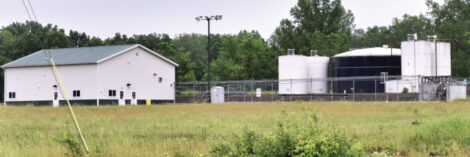
WEATHERSFIELD -- The Ohio Supreme Court ruled Wednesday that the state does not owe compensation to Howland based AWMS Water Solutions for suspension of the operations of an injection well AWMS drilled along state Route 169 in Weathersfield just north of Niles more than a decade ago.
The injection well was suspected of causing small earthquakes, and as a result, the Ohio Department of Natural Resources suspended the injection well operations in 2014, leading to years worth of litigation. AWMS is a wholly owned subsidiary of Avalon Holdings Corporation of Howland.
The ruling Wednesday relates to what is called a "takings" argument -- that by the ODNR's regulatory actions against the injection well, the state has taken private property from AWMS Solutions in the sense of depriving the company of all of its economically beneficial use of the property. The issue has been before the Ohio Supreme Court three times now after starting out at the Warren-based 11th District Court of Appeals.
Wednesday's ruling states that the 11th District's most recent ruling was that the state did not cause a "total taking" of the AWMS property, but did cause a partial taking. The 11th District also ordered eminent domain proceedings to determine the amount of compensation to be paid to AWMS for the partial taking.
The Supreme Court ruled that the appeals court was correct in saying AWMS was aware at the time it began to develop the property for an injection well that the injection well industry was highly regulated and that there was a danger that something like injection-well induced-small earthquakes could cause the ODNR to suspend operations.
But the 11th District ruling nonetheless ruled that those considerations weighed in favor of AWMS's position in the case, which the Supreme Court said was in error.
On another level, the 11th District had to evaluate the "character" of the ODNR's concern over public safety regarding earthquakes. But the 11th District did not weigh that factor heavily enough, the Supreme Court ruled.
"Because it is undisputed that AWMS's activities caused earthquakes, there can be no question that there were risks to public safety if AWMS continued in those activities," the Supreme Court ruled.
"Even though the evidence at trial showed that the earthquakes that had been experienced were of relatively small magnitude, they were still felt by people in the region, and the state did not have to wait to take action to protect the public until a larger, catastrophic seismic event," the ruling states.
"This is particularly true given the evidence at trial that important infrastructure was located near the AWMS well sites. There was no way of knowing how large an earthquake could be caused by AWMS's injection activities, and the state therefore had a significant interest in acting to prevent (or lessen the impact of) additional and possibly catastrophic earthquakes."
The Supreme Court stated that that factor "weighs against AWMS's takings claim far more than the (11th District) determined it did."
The concluding section of the ruling states that the 11th District erred in finding that the ODNR's order suspending the injection well amounted to a "partial regulatory taking," saying that if the 11th District would have weighed the factors correctly, it would have found that the ODNR's suspension of the injunction well "did not result in a compensable taking." The Supreme Court, therefore, reversed the 11th District's decision to order eminent domain proceedings to determine the amount of compensation to be paid to AWMS for the partial taking.