
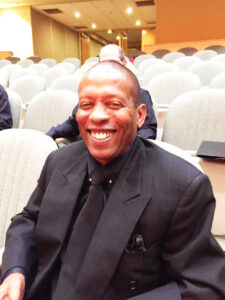
Warren veteran experienced the horrors of Vietnam
Trending
WARREN -- Ronald Franklin calls his year in Vietnam "an experience of a lifetime" that took him to places of beauty and unimaginable darkness.
Today, Franklin still has the photo album from that time, which is filled with images from Black Virgin Mountain, helicopters, base camp and photos of the men he trusted with his life.
"I've been to places I don't think any other human being had been over there, because we'd climb mountains, you'd come over a hill or something, and you see these waterfalls with the rainbow. I mean, it's just beautiful things," Franklin said.
Yet he is equally clear that "No amount of money can make you go back there. Never, never, never."
Franklin was 17 when he was drafted in 1970 as one of the men called up that year. His brother and cousins had already served.
He reported in June 1970, was processed through the induction center in Cleveland, then trained at Fort Campbell, Kentucky, and Fort Polk, Louisiana, as an infantry member with mortars.
As far as conversations with family, Franklin said it was something they just "didn't talk about."
After a short visit home, he shipped out from Travis Air Force Base in California. The flight stopped in Anchorage, Alaska. The plane ahead of his crashed into the ocean.
"A lot of my friends were on there," Franklin said.
Survivors learned the news only after they were over the ocean en route to Vietnam. They landed at Bien Hoa.
His first days "in country" put him with an experienced unit for on-the-job training in the field. They immediately assigned him the "slack" position as the last man in the patrol file.
"They said the most dangerous position is slack… that's where you're gonna learn, keep your eyes open," he said.
The point man watched ahead while slack, right behind him, scanned for threats from the rear or booby traps.
"When the enemy hits, it goes from the middle to the back, or they'll hit from the back," Franklin said.
Reality struck at Black Virgin Mountain, where U.S. forces held the bottom and North Vietnamese Army forces occupied the middle. Franklin went looking for a man from Warren and instead found bodies loaded on an ATV. The next morning, his squad moved to take the place of the fallen unit.
"That set in," he said. "And that's where I got my first combat experience."
He also walked into one of the war's most feared nights where there was an attack on Fire Support Base Mary Ann.
"This is the fiercest firefight I've ever been in," Franklin said. "Besides Tet, Mary Ann was it. Rockets, sappers...everything."
He remembers the chaos more than the sequence. The sudden thump of incoming rounds, the air shredding with explosions and the sense that the enemy was everywhere at once.
"You had rockets coming in and sappers inside the wire," he said. "It was intense. That was really intense."
Franklin doesn't linger on battle tactics or body counts. Instead, he talks about channeling his survival instincts by gripping his weapon and trying to tell friend from enemy in the dark.
"You don't think about politics when that starts," he said. "You think about staying alive and keeping the man next to you alive."
For Franklin, Mary Ann was the worst the war could throw at him.
For about a year in the field until December 1971, Franklin said he confronted the extremes of human endurance. Ambushed and trapped without water in the jungle heat, he saw desperation strip men to their core.
"You're thirsty and you're trapped and you can't get water… you sitting there looking at your fellow man, and the liquid in his eyes" he said.
In the infantry, survival forged tight bonds across racial lines.
"The infantry, I think, was a little different than the guys that were on the bases," Franklin said. "White, black, we… became each other's back. We became tight out there." One of those brothers was his slack man, known as "Mex." Franklin walked point, Mex walked directly behind, watching the ground for tripwires while Franklin scanned ahead.
"He watched my back," Franklin said.
They shared care packages from home -- his grandmother "hooked it up," as did Mex's mother.
Franklin said the two looked out for one another in a war where names on uniforms were often last names only, a deliberate barrier to closeness.
"So you wouldn't get that close, because if I lose you, it wouldn't be that hard," Franklin said.
When he returned home in 1972 after several broken promises of when that moment would come, Franklin said, "You know that you're not the same person that left."
In Warren, he struggled to reconnect.
"I didn't have much to talk about… They wouldn't understand it. We had no connection," Franklin said, noting he felt naked without his weapon.
His father, a World War II veteran, understood the silence better than most.
Reintegration was difficult. He and other Vietnam veterans faced rejection.
"We weren't accepted in the AMVETS, the VFW… 'You from Vietnam? No, because you weren't in a war.'" Franklin distanced himself from his two children after a divorce. PTSD triggers made steady work difficult.
Help came later through the Transcend program in Brecksville, a two-year intensive effort for vetted combat veterans.
Pulled from a drug-treatment class to join, Franklin initially distrusted the process but later found it to be transformative.
"It was really helpful, really, really helpful," he said. "They gave you tools to use when these situations would come up."
The program helped him rebuild relationships with his children, form healthier connections and he "started to laugh again."
Ronald Franklin
AGE: 75
RESIDENCE: Warren
SERVICE BRANCH: U.S. Army
MILITARY HONORS: National Defense Service Medal, Vietnam Service Medal, Combat Infantryman badge, Sharpshooter Badge Rifle M16, Expert Badge 81 MM, Sharpshooter Badge Pistol
OCCUPATION: Retired factory worker
FAMILY: Four children