
Trending
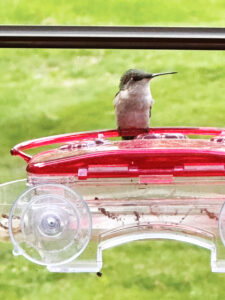
Most of us know of the ruby-throated hummingbird, a common visitor that weighs between 3 and 5 grams, less than a nickel. Behind that dazzling beauty, however, lies a solitary and aggressive territorial warrior.
How does such a tiny bird survive the extreme demands of high-speed life?
Metabolism and Torpor
During flight, a hummingbird’s heart can beat up to 1,260 times per minute, while its breathing rate can reach 250 breaths per minute. This extraordinarily high metabolic rate requires a constant supply of energy from high-quality food sources, such as nectar.
To conserve energy during the night when it cannot feed, a hummingbird enters a state called torpor. Torpor is a temporary, hibernationlike state where the heart rate and breathing slow dramatically, reducing the bird's metabolism to approximately 1/15 of its normal rate. This adaptation allows them to survive long periods without eating.
Defying the Laws of Aviation
Hummingbirds are the helicopters of the avian world. They move their wings in a figure-eight pattern, generating lift on both forward and backward strokes. They hover, fly backward and even upside down.
Their wings beat between 50 and 80 times per second, creating the audible “hum” that gives them their name. This level of maneuverability allows them to navigate dense garden foliage with unmatched agility.
The Gulf Shortcut
While many ruby-throated hummingbirds take a coastal route to winter in Mexico and Central America, some take a shortcut over the Gulf of Mexico.
This nonstop flight over open water requires enough fuel to reach the other side. They return north between March and April.
Architectural Genius
The hummingbird’s tiny cup-shaped nest is typically built in the crotch of a tree branch, made from plant down and animal hairs, camouflaged with lichens on the outside. Spiderwebs provide structural integrity and allow the nest to expand as one or two chicks grow. Nests avoid breaking as the young birds gain weight, ensuring a secure home for the four weeks before fledging.
Flowers and Feeders
While hummingbirds prefer red and orange tubular flowers for their sucrose-heavy nectar, they are also active predators. To meet protein requirements for building muscle and feeding their young, they catch aphids and small insects in flight.
You can provide a food source using a solution of white granulated sugar and boiled water without red dye. Change the food and sanitize the feeder every few days to avoid fermentation. Ideal ratio depends on the environment:
• End of Season: 1 cup sugar to 3 cups water for higher energy needed as birds prepare for migration.
• Hot Weather/Hydration: 1 cup sugar to 4 (or even 5) cups water when birds require more water to stay hydrated.
• Fill the feeder until two weeks after last sighting to feed any migrating stragglers.
Hummingbirds are essential pollinators that maintain the health of our ecosystems. This coming season, consider planting salvia or bee balm to welcome these tiny friends home.