
From Vienna to Fort Lauderdale
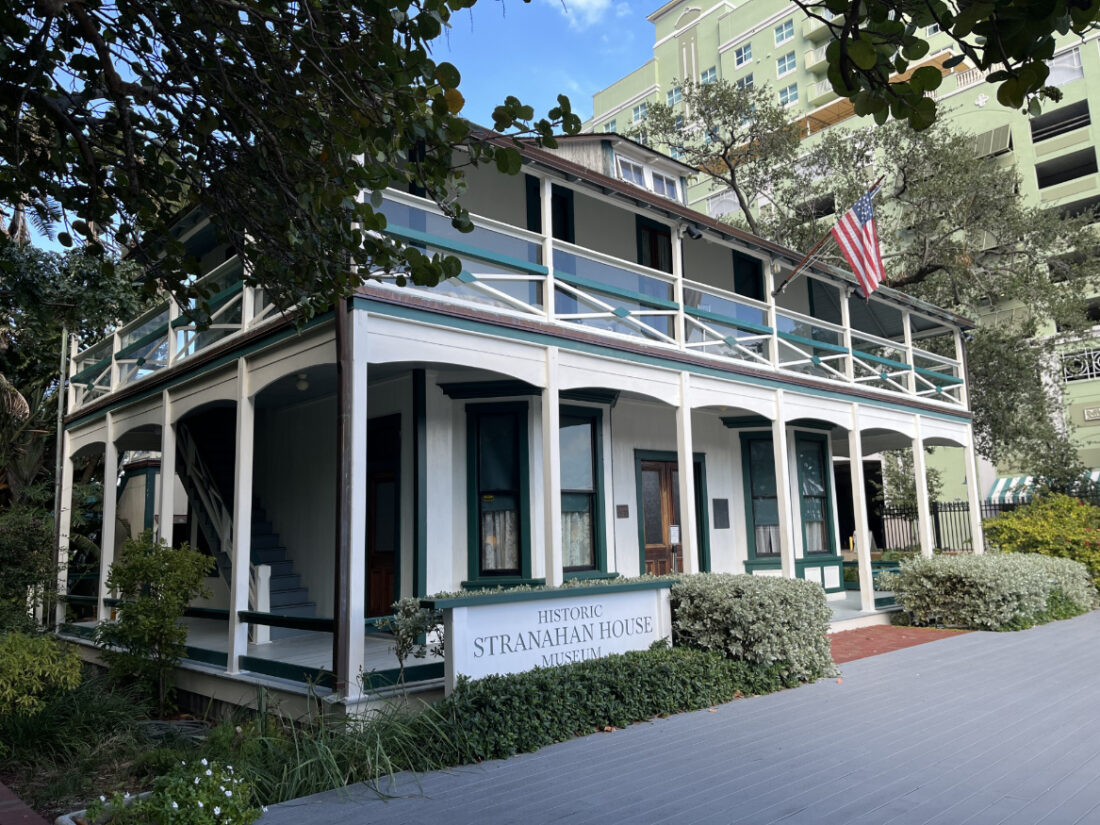
Photo courtesy of the Vienna Historical Society The Stranahan residence was designated a historic structure in 1973 and restored to its 1915 appearance during the 1980s. Today, visitors can tour the historic Stranahan House, the oldest surviving structure in Fort Lauderdale. Frank Stranahan was born in Vienna in 1865.
EDITOR’S NOTE: This is part of a weekly series on our region’s history coordinated by the Trumbull County Historical Society.
Frank Stranahan was born on Aug. 21, 1865, in Vienna to Rev. Robert Stranahan and Sarah McFadden.
After briefly working in a steel mill in nearby Youngstown, Frank left Ohio in 1887 for Melbourne, Florida, where he joined his cousin, Guy Metcalf, in the family mercantile business. It is believed he may also have sought the warmer climate for health reasons.
After several years working as a clerk, Metcalf sent Frank in 1893 to manage a hack line stop at New River Camp, about 150 miles south of Melbourne. The camp served as an overnight stop for travelers journeying through what is now Fort Lauderdale.
There, Frank established a trading post, operated a ferry service across the New River, acted as an unofficial banker, and served as postmaster for the sparsely populated area.
Frank founded Stranahan & Company, a store along the New River that supplied goods to local settlers and the Seminole Tribe. At a time when few lived in the region, he began purchasing land and lots, later selling them as the community expanded. His business ventures grew steadily, and he helped establish the area’s first bank, the Fort Lauderdale State Bank.
He married Ivy Cromartie Stranahan, the region’s first schoolteacher, who was 16 years younger than he was. Together, the Stranahans became deeply involved in civic and social causes. They donated land for schools, parks and a baseball field, reflecting Frank’s lifelong passion for the sport. Frank also played a key role in the incorporation of Fort Lauderdale in 1911.
The Florida land boom of 1924 to 1926 brought Frank considerable wealth through real estate and other business ventures. The Stranahans enjoyed life at their home overlooking the New River.
However, tragedy soon followed. The collapse of the land boom in 1926, coupled with a devastating hurricane that heavily damaged Fort Lauderdale, left Frank financially strained. Around the same time, he suffered several personal losses, including the deaths of his parents and his brother, Will. Overwhelmed by financial troubles and grief, Frank experienced a nervous breakdown and was briefly hospitalized.
Just a few days after being released from the hospital, Frank tragically ended his life. It was on May 22, 1929, that he tied a sewer grate to his leg and plunged into the New River in front of his home. His death deeply affected the community and left his widow devastated, especially since she knew little about his complicated business affairs.
After Frank’s estate was finally settled six years later, Ivy continued on and supported herself by renting rooms in the family home to tourists and leasing the first floor to restaurant operators. She remained an important figure in the community until her death in 1971 at the age of 90.
Despite the tragic ending to his life, Frank Stranahan left an enormous legacy in the city he helped build. Often called the “Father of Fort Lauderdale” and recognized as its first permanent white settler, his name lives on throughout the city in places such as Stranahan Landing, Stranahan Park, Stranahan River and Stranahan High School.
The Stranahan residence was designated a historic structure in 1973 and restored to its 1915 appearance during the 1980s. Today, visitors can tour the historic Stranahan House, the oldest surviving structure in Fort Lauderdale, and relax on its porch overlooking the New River as the Stranahans once did.
Local News

New dawn for Champion, Cortland grocery stores
New shelter’s opening date set
Staff report WARREN — An opening date has been set for The Healthy Hearts & Paws Project’s upgraded ...
Warren limits number of food trucks at events
WARREN — City council has approved limiting the number of food trucks at events to three. City Law Director ...
White House supports restoration of Delphi pensions
The White House supports the long-discussed restoration of benefits to Delphi salaried retirees, who lost them 17 ...
DeWine kills bill requiring ID for mail-in voters
A bill to require photo identification from all Ohioans who vote by mail has been vetoed by Gov. Mike DeWine. ...
Rep. Thomas’ bill vetoed by governor
Gov. Mike DeWine vetoed a bill, sponsored by state Rep. David Thomas, addressing submetering — a practice that ...