
Maplewood seniors learn about raising livestock
Trending
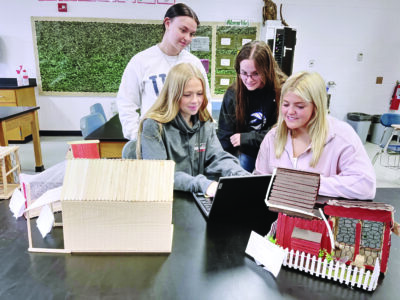
MECCA -- Maplewood High School seniors learned what is involved in raising chickens, pigs, cattle and other animals as part of a new livestock science class.
Many students in the school district have farms where they already have various livestock to raise. Sarah Holbrook, science instructor, said the class is designed to introduce students to what is involved in raising livestock for food, with an emphasis on poultry.
The class' main project was the "Farm to Table Meat Chicken Project."
She said the meat chicken project involved four students in the class raising chicks sourced from a nearby hatchery until they were ready to be eaten.
The class was offered for the first time this school year for upper high school students as a science elective, with the four students also enrolled in a new zoology elective course. The chickens raised were Cornish crosses, which is the most popular meat bird in North America, according to the U.S. Department of Agriculture. Holbrook said the focus was on how to raise, feed and take care of the animals.
"You treat the animals as good as you can and give them a good life. This teaches where our food comes from," she said.
There also is a focus on how to slaughter the animals as smoothly and humanely as possible. Holbrook raises chickens at her home, as do some of the students.
"They saw how quickly the chicks grew. These chickens are specifically raised for meat. The class has a big focus on animal husbandry, learning to take care of animals and seeing what may be out of place and knowing what to do," Holbrook said.
Holbrook said food safety and humane treatment of the animals are a priority. She said students take part in book learning and hands-on learning with a focus on Ohio-based farms.
STUDENTS' PERSPECTIVES
Kaycee Hyde has had classes with Holbrook before and said she knew it would be a good class.
"When I heard about the class being offered and it involved hands-on projects, I wanted to take it. My family has a farm, so this class helped me gain more knowledge of what is involved with raising the different animals," Hyde said.
She plans to study psychology and neurosurgery in college.
Jessica Siegel said she grew up around a farm and wanted to gain more information and skills on raising animals such as horses and cattle.
She said she learned that animals raised for food are not treated like household pets.
Siegel plans to study radiology technology.
Harley Agardi said she wanted to take the class when she heard the class would raise chickens. She said she noticed the difference in the taste of the chickens raised as compared to store meat.
"The way the meat tastes depends on how the chickens are fed and raised. Meat in the stores is super expensive. We recorded everything we did when raising the chickens. I convinced my parents to raise meat birds," Agardi said.
She plans to study veterinary science.
Lauran Krieg said the class helped her earn an honors diploma because she took four years of science courses.
"I gained more general knowledge of what goes into raising meat birds and what parasites affect cattle and pigs," Krieg said.
Holbrook said projects were done both individually and together. The students were very creative and worked collaboratively.
Siegal said the four took care of raising 15 chickens starting in late March and took turns coming to the school on weekends to care for them, such as feeding and providing water and cleaning their areas.
Holbrook said the chicks stayed inside her classroom until they had feathers and could go outside. She said documented weekly records showed the condition of the chicks and how they were cared for and raised. The students also did a cost analysis of what they had to invest in caring for the chickens.
The four said their families sell eggs from chickens they raise. They took the meat from their school-raised chickens home for their families. Holbrook said with the meat, they made creamed chicken over biscuits and chicken pasta.
Also as part of the class, the students went on field trips to livestock auctions and feed mills.
Holbrook, who has been raising and processing meat birds for years, said the students had no experience with processing chickens, so she demonstrated with some roosters she had.
She said she expects bigger classes in the future, which will raise between 20 and 30 chickens.
Holbrook mentioned that other educators in Ohio, who offer a similar course, have started to sell their products to the community, indicating the class has the potential to fund itself.
In Ohio, Holbrook said it is legal to sell up to 1,000 processed chickens before any special permit or licensing is needed.