Pecchio finds musical home with Bramhall
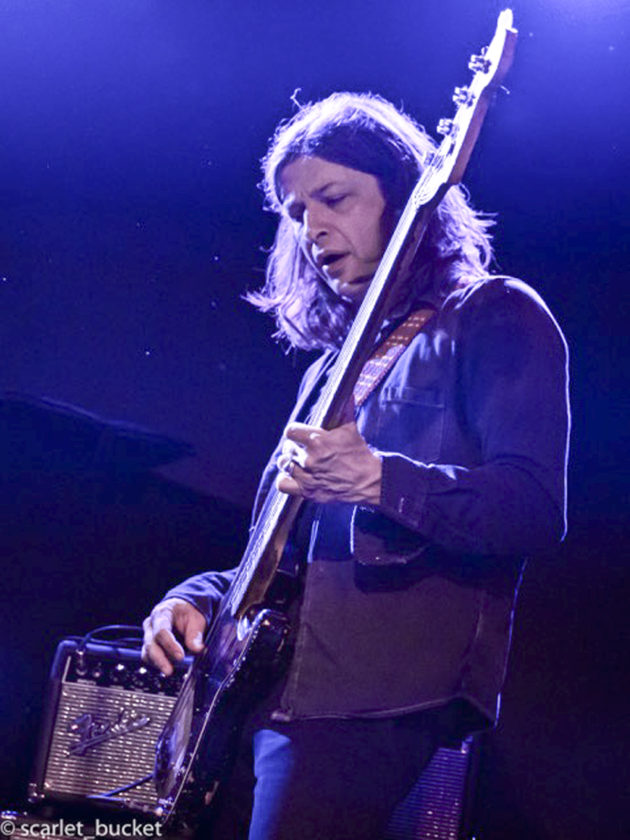
Ted Pecchio got a text from Doyle Bramhall II in 2014 — “How fast are you at learning songs?”
“I wrote back, ‘I already know ’em,'” Pecchio said. “Good answer, he said.”
Bramhall had a tour starting and the organist who was supposed to handle the bass parts had to drop out.
“(Bramhall asked) can you be on a plane tomorrow morning and can you learn the songs tonight,” Pecchio said. “I stayed up and crammed, and the next day we were doing it, and it was amazing.”
Pecchio met Bramhall a few years before, but that tour started a musical partnership that continues on Bramhall’s 2016 album, “Rich Man,” and his current tour, which comes to The Kent Stage on Friday.
“This is one of if not the most exciting thing I’ve ever been a part of,” Pecchio said. “It’s a true brother experience.”
Pecchio, the son of Glass Harp / Michael Stanley Band bass player Daniel Pecchio, has plenty of experience to use for comparison. He’s recorded and / or toured with Derek Trucks, Susan Tedeschi and their combined Tedeschi-Trucks Band, and he’s worked with Rich and Chris Robinson of the Black Crowes on their separate solo projects, blues acts Shemekia Copeland and Tinsley Ellis, and funky jam bands like the Codetalkers.
He’s joined in Bramhall’s band by Adam Minkoff, guitar, and Anthony Cole, drums. In an interview with No Depression magazine, Bramhall call his current backing band, “Some of the most talented musicians I’ve ever played with,” and he’s played with some of the greats. Bramhall still was a teenager when he joined the Fabulous Thunderbirds, and in his career, he’s played in Eric Clapton’s and Roger Waters’ touring bands and recorded with Clapton, Elton John, B.B. King, Sheryl Crow and many others.
“Rich Man” is Bramhall’s fourth album, but it had been 15 years since his last solo record. Bramhall had recorded some of the songs in between other jobs, Pecchio said, but getting the current band together seemed to accelerate the process.
“The chemistry from the very first time with this group of four people was a really euphoric experience beyond description,” he said. “It was like, ‘We have to get this band in the studio right away.’ We flew to Brooklyn, and the goal was to cut maybe a couple songs, two or three tracks. We ended up cutting five, and they all made the record. We were only there a couple days. It was the kind of thing where you track it, listen to it and, ‘Well, that’s that, on to the next.’ It just happened with very little effort.
“There’s such a deep understanding of music, harmonically and rhythmically. Everyone just plays something that sounds like what you want to hear.”
Pecchio credited Col. Bruce Hampton, leader of the Codetalkers, with shaping his musical vision and instilling the principles that guide him today — keeping the focus on the music instead of “chicks, money, ego, opportunity” and the other distractions that come with being a professional musicians.
“I was fortunate to work with him for five years,” Pecchio said. “He’s still one of my closest friends and confidants. Working with Bruce taught me more and confirmed more about making music and the reasons for doing it. He’s also responsible for introducing me to Derek (Trucks) and Susan (Tedeschi) and others in my life who not only became close friends but provided me with incredible opportunities to make music.
“Musically, he just granted an enormous freedom … Trust yourself, trust the music and pour humanity into the music instead of consciously thinking about something or forcing something.”
Of course, having a father who is a bass player also had an impact, but his early memories have more to do with his father as a music fan than a musician.
“Seeing my father, when I was young, with Glass Harp or Michael Stanley Band are not as prevalent in my mind as being with my father and just the sheer joy when Jackie Wilson was coming on the radio or Wilson Pickett or the Isley Brothers or Sly Stone. He had such a passion for James Brown and soul music and funk music. It just seemed like pure excitement jumped from his bones. He and my mother were both just big Beatles’ fans, and that’s one of my earliest connections with music.”
His appreciation for his father as a musician came as a teenager when Neal Williams, a Glass Harp fan and archivist, sent him all of their albums and live recordings.
“Very quickly they became an obsession … cranking that Walkman listening to ‘Live at Carnegie Hall’ at 120 decibels,” he said. “It instilled a high in me that would never go away.”
The respect is mutual. His father raved about Bramhall’s album and listed all of his son’s accomplishments in an interview last month before Glass Harp’s Powers Auditorium concert.
Ted Pecchio still plays with the blues band Scrapomatic when he’s available and said he’s recorded nearly an album’s worth of material with members of the Greyhounds for a side project called Missing Pieces. But playing with Bramhall remains his primary focus.
“I’m not going anywhere. I hope we can do this for the rest of our lives.”
Ticket
Robins books Rodney Atkins for Oct. 1
Staff report WARREN — Country singer Rodney Atkins will play the Robins Theatre on Oct. 1. Between 2006 and ...
Passport encourages exploration of history in Trumbull
Folks don’t need a passport to get around in Trumbull County, but they might win a prize if they have ...
Gray Areas: Fests for foodies, redheads debut
Assorted ramblings from the world of entertainment: • Food and music — with a side of boxing — are planned ...
Simply Slavic sets 15th baking contest
Simply Slavic is seeking entries for its annual baking contest on June 14. This year’s themes are “15 Years ...
Ticket stubs
Bike event postponed in Youngstown Due to the weather forecast, the Bike @ the Market event planned today in ...