Fishers return to Ohio after 200 years
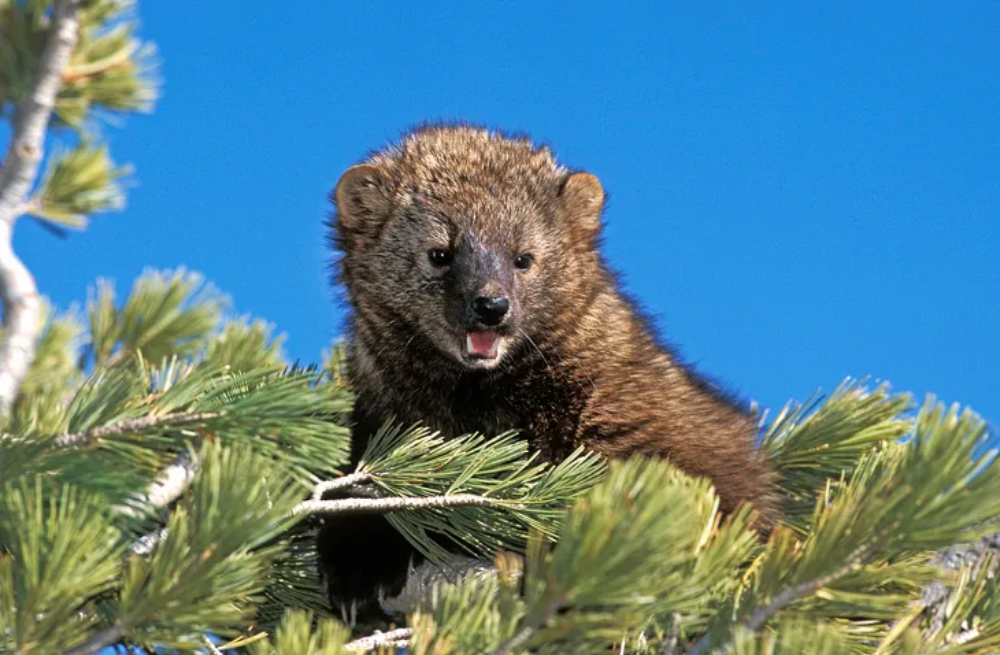
Getty images Fishers are a member of the weasel family. They are nocturnal carnivores that hunt in mostly woody areas with overhead cover. They climb trees looking for birds and eggs, reptiles, amphibians, insects, fruits, nuts, mushrooms, as well hunting rabbits, frogs, small rodents, and their favorite prey, the porcupine.
Beginning in 2024, there have been reported sightings of a mammal that has been gone from Ohio for 200 years!
It is the fisher (Martes pennanti, or Pekania pennanti). Fishers are nocturnal carnivores that hunt in mostly woody areas with overhead cover. They climb trees looking for birds and eggs, reptiles, amphibians, insects, fruits, nuts, mushrooms, as well hunting rabbits, frogs, small rodents, and their favorite prey, the porcupine.
The fisher is a member of the weasel (Mustelidae) family. They are 31 to 40 inches long (with a 14-inch tail), and males weigh 8 to 13 pounds and females 4 to 6 pounds. The body is long and lean, and low to the ground. They typically walk with a staggered, chain-like pattern — rear paw lands close to the front paw.
When hunting, they move in zig zag patterns to scent out prey. They have 5 toes on each foot and very sharp claws. The skull measures over 5 inches and holds 38 teeth. With these, the fisher characteristically bites the back of the prey’s neck at the base of the skull, a typical Mustela (weasel) behavior.
The fisher is brown, almost black, with tan markings on its chest. The pelt color changes with seasons: winter, dense, glossy, deep brown to black. Face and shoulders gold or silver with a white abdomen. The tail gets very bushy.
Mating begins with males marking territories with urine, feces or musk located on plantar glands on the back feet that enlarge for mating to give off scent trails. Males are larger than females. Fishers mate right after she has given birth to three to four kits, and she delays implantation of the fertile eggs until the following spring. A hollow log or a sheltered spot is chosen to have her babies. She cares for the kits until late summer, then they set out on their own.
The name ‘fisher’ likely comes from a mistranslation or alteration of a term used by early French fur trappers.
They thought the fur of the fisher (Pekania pennanti) resembled that of the European polecat, a wild ferret, known in French as fichet.
This is an exciting time in Ohio as some of the past animals are beginning to move back and repopulate in numbers that will reset the balance of predator/prey relationships. With time and patience, I believe we are on the cusp of great things for Ohio!
Lifestyles
HINTS FROM HELOISE: How to read tiny label on food product
DEAR HELOISE: I, too, have trouble with the very tiny print on labels. I found a trick that is a lifesaver for this ...
TO YOUR GOOD HEALTH: Keep your coronary artery levels safe
DEAR DR. ROACH: I’m an 80-year-old male who doesn’t drink or smoke, exercises regularly and takes telmisartan ...

How to stay safe while traveling during extreme heat

TUESDAY EVENING TV LISTINGS
Health notes
To include or update items in the weekly Health News list, email information to tmunnell@tribtoday.com or ...