
Murderer Charles Lorraine, 56, dies on death row
Charles Lorraine, 56, killed elderly Warren couple in their home in 1986; his death took place on Sunday
Trending
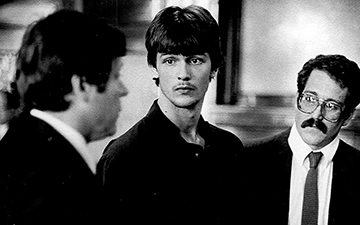
WARREN -- Convicted double murderer and death row inmate Charles Lorraine, who fatally stabbed an elderly couple in their Haymaker Avenue NW home in Warren, died Sunday, as confirmed by the Trumbull County Prosecutor's Office.
No cause of death was given for Lorraine, who was 56 at the time of his death at the Ohio Corrections Medical Center.
After being found guilty of the capital murders in 1986, Lorraine had been scheduled for the death penalty several times with his last rescheduling set for May 13, 2026.
The date would have come 40 years and six days after the slaying.
On May 6, 1986, Lorraine, using a butcher's knife, stabbed Raymond Montgomery, 77, five times and then went downstairs to stab the man's bedridden 80-year-old wife, Doris Montgomery, nine times.
Then 19, Lorraine met some friends at the former Olympic Bar on Parkman Road, spending the money he stole from the couple's home. When he ran out of money, Lorraine stole a car from another elderly woman to go back to the Montgomerys' house to steal more money.
Lorraine was one of three death row inmates to be given a reprieve by Gov. Mike DeWine late last year as Lorraine's March 15, 2023, execution date inched closer.
WATKINS REFLECTS
Trumbull County Prosecutor Dennis Watkins served as the lead prosecutor during Lorraine's trial in the courtroom of the late Trumbull County Common Pleas Judge Mitchell F. Shaker in 1986.
"Shortly after Danny Lee Hill was sentenced to death for the September 1985 aggravated murder of Raymond Fife, in the spring of 1986, Lorraine planned a knife attack on an elderly couple who lived on Warren's west side," Watkins said, reflecting on the two prominent cases.
At the time of the couple's slaying, Lorraine was a repeat violent offender as an adult who was out on bail for robbery and burglary charges.
"He obtained a knife from a friend, and he also wore gloves, because in his words he 'didn't want to leave fingerprints or get blood on his hands,' " Watkins said.
The revelation came during a police interview with detectives Bill Seese and the late Howard Andrews. Lorraine gave a detailed confession claiming that "drugs made me do it."
After brutally murdering the couple, Lorraine stole money and other valuables.
"As he was walking from the home, Lorraine came upon a friend -- who later became a witness at trial -- and told him that he just killed 'two old (expletive),' and that he was buying drinks," Watkins said.
When Lorraine ran out of money stolen, Watkins said Lorraine persuaded a friend to join him in burglarizing another elderly woman's home. The prosecutor explained the pair stole her car before driving back to the Montgomerys home to steal more items.
"At trial, the defense team tried to convince jurors that others were to be blamed for Lorraine's brutal, criminal behavior along with the drugs," Watkins said.
The defenses tactic was not enough to persuade the jurors, who returned a guilty verdict.
APPEALS PROCESS
Lorraine was sentenced to die in December 1986 and subsequently filed several motions and tried different legal maneuvers to avoid the death penalty, including that he was intellectually disabled.
Those all failed.
Watkins said despite Lorraine's claims of being intellectually disabled, no evidence or test showing proof existed.
"Instead he was found to be a sociopath," Watkins said.
At one point during the long appeals process, Lorraine admitted to a TV news reporter that he had filed the mental retardation motion only to avoid being executed.
TV news cameras filmed as Lorraine stated, "I'll do whatever I need to stay alive. I am not mentally retarded," he said as he exited the courthouse.
After he exhausted state and federal appeals, Lorraine's execution date was set for Jan. 18, 2012. However, on Jan. 11, 2012, a temporary stay was placed on the executions of three death row inmates, including Lorraine, as a result of a challenge of Ohio's death row protocol.
"Lorraine's attorneys were able to delay the process by convincing federal Judge Frost to stay the execution dates because of claims of "'cruel and unusual punishment' by lethal injection drug execution," Watkins said.
In May 2011, Lorraine penned a 17-page typewritten story of his life ahead of court hearing. He titled it, "Where I Went Wrong and How I got to Where I Am Today."
The story was used by Watkins during a December 2011 parole board hearing, which helped convince the board to deny clemency for Lorraine.
The narrative described the Montgomery couple, who trusted Lorraine to cut their grass, as the "two nicest people you would ever want to meet."
In the story, he again blamed the murders on his drug use.
DeWine issued the reprieve of his execution because of ongoing problems involving the willingness of pharmaceutical suppliers to provide drugs to the Ohio Department of Rehabilitation and Correction, pursuant to DRC protocol, without endangering other Ohioans, a release from the governor's office stated.
After hearing of Lorraine's death, Watkins said, "Though Lorraine should have been executed long ago, his death brings to an end a long journey for the victims and the community in having justice done. The only cruel-and-unusual punishment involved in this case was the tortuous pain and death he inflicted on the two elderly victims."
He added: "Sadly, there is no remorse here, but there is some finality and closure with Lorraine's death."