
Digging for a good time
Archaeology camp unearths past in North Bloomfield
Trending
NORTH BLOOMFIELD -- A brief search on the internet reveals numerous inspiring quotes and mottos related to archaeological science. After spending time at the second annual Trumbull County Historical Society Archeology Summer Camp at Center Brook Manor one could add, "A small area can reveal many interesting things."
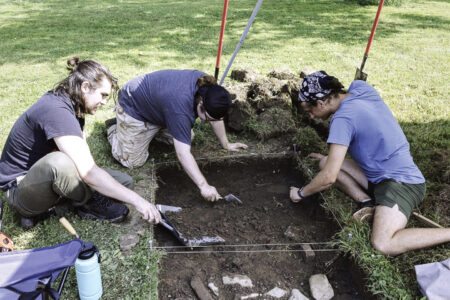
The 19 young campers -- ranging in age from 8 to 14 -- along with nine Youngstown State University students enrolled in the summer class, Archaeological Techniques, taught by Dr. Matt O'Mansky, YSU professor of anthropology, and volunteers created "test pits" (shallow, square-shaped trenches that give an indication of how the area was used). Using hand trowels, they removed dirt, which gets sifted in order to separate soil from artifacts.
"The goal of this camp is to teach kids about archaeology and spark an interest in the field," said Sutliff Museum Managing Curator and Archivist Kate Pfouts. "Ultimately, we want the kids to have fun, learn, and try new things. So far, we have heard from the kids that they never want the camp to end."
The manor's long history offers opportunities for many discoveries.
Center Brook Manor in North Bloomfield was built in 1845 for Charles and Julia Brown, and was originally named Center Brook Farm as it encompassed 110 acres. As a verified stop on the Underground Railroad, Center Brook Manor holds an important role in both local and national history.
With the original house intact, the grounds present evidence of different time periods, as well as buildings including an icehouse, blacksmith shop and barn.
O'Mansky, who has worked on many archaeological sites not only in the U.S. but in Guatemala and the Bahamas, met with the manor's owner, Roger Peterson, last January and wasn't only pleased with the location and what it could offer, but also the attitude of Peterson.
"I met Roger ... and he still blows me away with his passion, his energy. It's amazing. We talked about the property and what used to be here because the house itself is great, but we can't really do anything with that as archaeologists. We talked about things that used to stand on property. It's exactly what we're looking for."
Peterson explained how the location has become a teaching tool.
"This is the first archaeology camp that we've had here. We've had different history camps. We've had different workshops. We did a historic window workshop on 'How do you repair wooden windows?' Then, we did a brick workshop. Now, we're getting into stuff like this.
"There's been a really nice return from the public. They like having this kind of stuff. They like it being close. They come out, and there's a lot of repeat people. 'We love the place. We love what you're doing. We want to be part of it and we want to learn from it.'"
Besides the test pit, numerous small flags were placed in areas to signify the possibility of a onetime structure on the property.
"We're already finding some interesting artifacts, and we have some promising places to dig because we used some of our remote sensing equipment, ground-penetrating radar and metal detectors.
As far as his expectations for Center Brook Manor, Peterson said, "The artifacts we see because ... most of what I've done is historical archaeology like this in this region, and so, what we find is more broken glass from bottles -- clear glass, green, blue, brown [glass]. We'll find bits of china, which is really useful because you can usually date that from the patterns. We found a little bit yesterday. I expect we'll find more odds and ends of metal, also old nails from the buildings. Possibly, animal bones from the diet, and maybe some surprises. That's the fun of archaeology."
Already pleased with the manor being a learning center, Peterson's enthusiasm for the archaeology camp correlates to discoveries that have been unearthed.
"I haven't been able to sleep. I've been so excited because, in two years, I want to rebuild the blacksmith shop, but I want to do it correctly. I don't want to just throw something up somewhere. Now that they've identified the possible sight with the possible dimensions, I can say definitively, 'This is where the blacksmith shop was. This was the size, and this is why every farm had one in the 1840s.'
"The opening that this is doing for the history around here is just ... I can't describe how excited I am."