
The canal that built Girard
It’s hard to picture it now, but the city of Girard wasn’t always the quiet community it is today.
Nearly two centuries ago, it was nothing more than open farmland and woods along the Mahoning River. What changed everything was a canal and four determined men who saw potential where most others saw only fields and water.
One of those early trailblazers was Dr. John W. Seeley, who came to Howland from Pennsylvania in 1801. At that time, the area was still a rough frontier. Seeley became one of Trumbull County’s first physicians, but he never limited himself to medicine.
He served in the War of 1812, was elected as a state senator and later threw his energy into promoting the Pennsylvania and Ohio Canal. When the canal was completed in 1840, Seeley joined the first celebratory boat trip. Sadly, the excitement proved too much — he fell ill during the event and died shortly after. It’s a dramatic ending, but it speaks to how deeply he cared about the project.
The second man, John W. Collins, came from Virginia and brought a strong business sense with him. In 1835, he bought a stretch of land near Howland and later joined the others in a larger development effort. Collins opened a general store at Howland Corners, providing settlers with the supplies they needed and helping stir new life in the community.
Then came Mathew Birchard, a young lawyer from Massachusetts who settled in Warren after studying law. He quickly earned a reputation as a sharp legal mind and eventually rose to become a Justice, and later, Chief Justice of the Ohio Supreme Court. Birchard’s organization and judgment helped give direction to the group’s shared ventures.
The last of the four, David Tod, was born in the nearby Brier Hill area of Youngstown in 1805. Like Birchard, he studied law in Warren and began a long career in public service. Tod became Warren’s first postmaster, served in the State Senate in 1840 and was later appointed U.S. ambassador to Brazil. Twenty years after that, he became Ohio governor, leading the state through some of its most challenging years.
In 1839, the Pennsylvania and Ohio Canal reached Girard, changing the region forever. A two-level dam was rebuilt, a granite lock was installed, and a wooden covered bridge stretched across the Mahoning River — roughly where the viaduct stands today. The improvements turned what had been an isolated spot into a valuable trade route.
Shortly afterward, Andrew McCartney leased the local mill to a partnership that rebuilt it into a two-story building in the Classic Revival style. The updated mill could turn out about 70 barrels of flour a day — an impressive feat at the time.
On the east bank, a canal basin was dug so boats could load and unload freight. The road leading there was called Basin Street, which was later renamed West Broadway. With the canal in place, Girard became a hub for shipping agricultural goods and receiving manufactured products from bigger cities. By 1837, development had picked up enough that surveyors mapped 15 blocks and divided the land into lots.
The first few were sold that same year, including one purchased by Henry Stull near the basin for just $33. Those early sales marked the beginning of downtown Girard.
The men behind Girard’s beginnings — Seeley, Collins, Birchard and Tod — came from different backgrounds, but they shared one thing: vision. They saw the possibility where others saw limits. With help from the canal, they built a foundation for a town that is still standing more than a century later. What started as a dream beside a muddy river turned into a community that continues to reflect their determination, hard work and hope for the future.
Local News
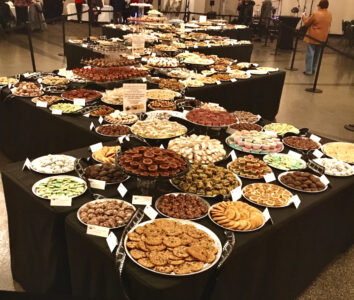
Cookie contest benefits Valley Historical Society
On the record
Trumbull County WHAT: Trumbull Career & Technical Center board meetings Jan. 15 and Feb. 12: The ...
The canal that built Girard
It’s hard to picture it now, but the city of Girard wasn’t always the quiet community it is today. Nearly two ...

Night of Hope shines light on need for foster homes
Niles man arrested following standoff with police
Staff report NILES — A Niles man was arrested Sunday morning following a standoff with police on Wood ...
Cortland turns to outside group to hire new fire chief, captains
CORTLAND — City officials are turning to an outside association to run upcoming fire chief and fire captain exams ...