Justice Dept. releases redacted Mar-a-Lago search affidavit
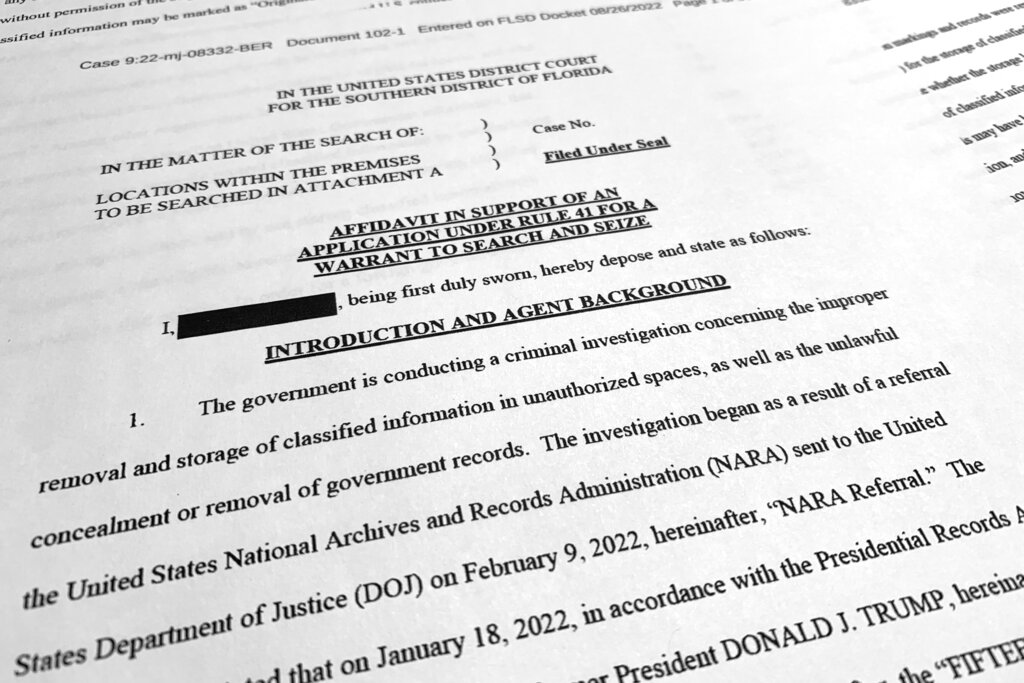
The affidavit by the FBI in support of obtaining a search warrant for former President Donald Trump's Mar-a-Lago estate is photographed Friday, Aug. 26, 2022. U.S. Magistrate Judge Bruce Reinhart ordered the Justice Department to make public a redacted version of the affidavit it relied on when federal agents searched Trump's estate to look for classified documents. (AP Photo/Jon Elswick)
WASHINGTON (AP) — Fourteen of the 15 boxes recovered from former President Donald Trump’s Florida estate earlier this year contained documents with classification markings, according to an FBI affidavit released Friday explaining the justification for the search of the property this month.
The 32-page affidavit, even in its redacted form, contains additional details about an ongoing criminal investigation that has brought fresh legal peril for Trump just as he lays the groundwork for another presidential run. It underscores the volume of sensitive government documents located at Mar-a-Lago and reveals FBI concerns that the records were being retained illegally.
Though the document offers the most substantial description of the investigation, federal officials also redacted significant portions of it to protect the identity of witnesses and to avoid revealing sensitive investigative tactics.
The FBI submitted the affidavit, or sworn statement, to a judge so it could obtain a warrant to search Trump’s property. Affidavits typically contain vital information about an investigation, with agents spelling out the justification for why they want to search a particular property and why they believe they’re likely to find evidence of a potential crime there. But affidavits routinely remain sealed during pending investigations, making the judge’s decision to reveal portions of it all the more striking.
In an acknowledgment of the extraordinary public interest in the investigation, U.S. Magistrate Judge Bruce Reinhart on Thursday ordered the department by Friday to make public a redacted version of the affidavit. The directive came hours after federal law enforcement officials submitted under seal the portions of the affidavit that they want to keep secret as their investigation moves forward.
The redactions proposed by the Justice Department are extensive given the sensitivity of the investigation, lessening the likelihood that the document will offer a comprehensive look at the basis for the unprecedented search or significant insights about the direction of the probe. Yet even a redacted affidavit can contain at least some fresh revelations about the investigation, and is likely to help explain why federal agents who had tried for months to recover sensitive government records from Mar-a-Lago ultimately felt compelled to obtain a search warrant.
Latest News

Cavaliers lose Game 2, down 0-2 to Pistons

Local teams vie for Trumbull County championship

Pirates take series over Diamondbacks
Youngstown Phantoms reload in USHL Draft
The Youngstown Phantoms bolstered their roster for the upcoming season and beyond this week, selecting 31 players ...

Guardians beat Royals 8-5 to split series