
Trending
Deception plays a prominent role in bridge, just as it does in most other competitive endeavors. But while a declarer can practice deception with virtual impunity, the defenders run the risk of misleading their partners.
Nevertheless, there are occasions when a defender can judge that the only one who can fall victim to his ruse is the declarer. Here is a typical case.
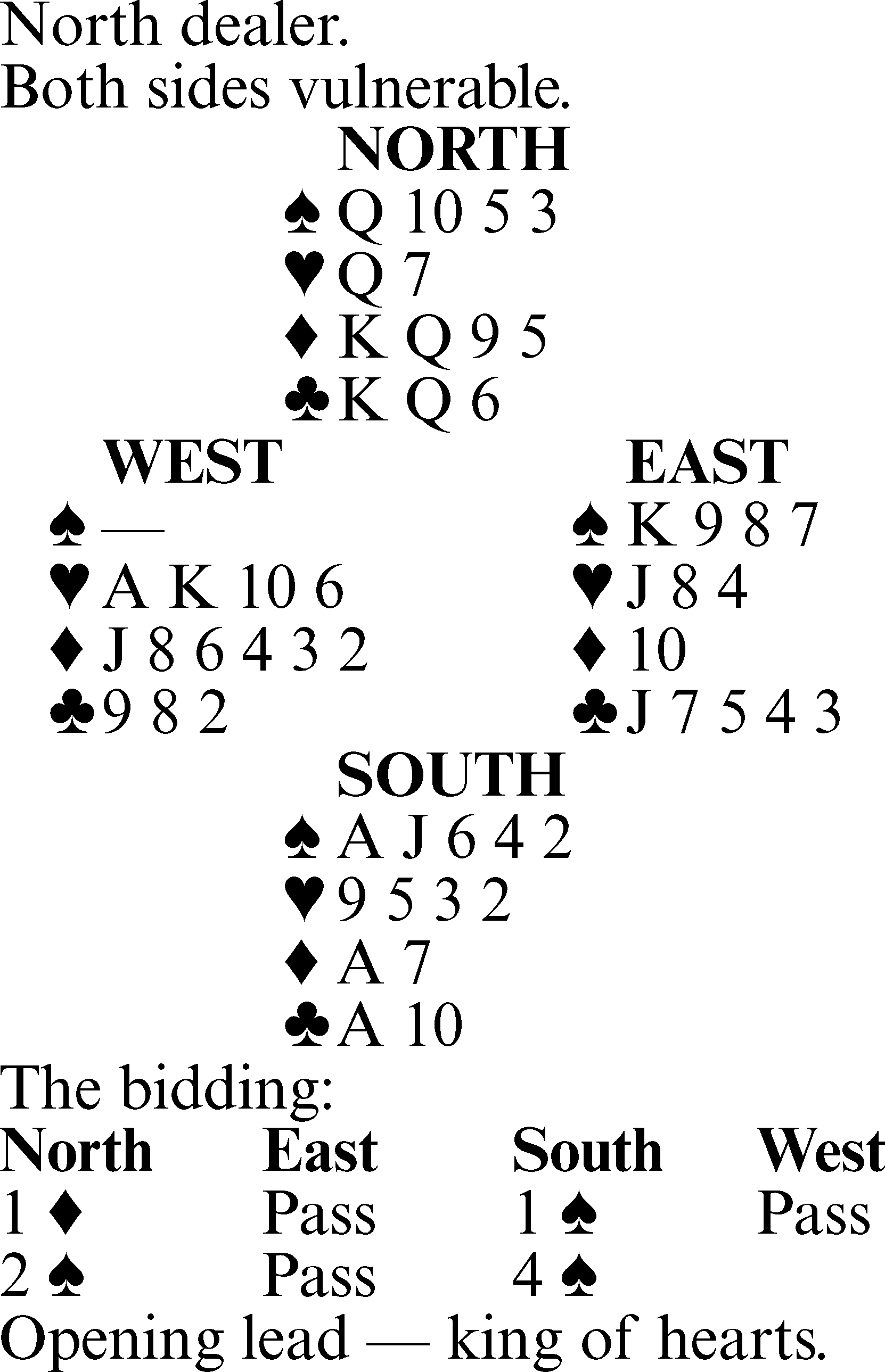
West led the king of hearts, and East, sizing up the defense's prospects, saw that West could take two heart tricks, and that he himself had a sure trump trick. It was also clear that South had to have all three missing aces for his bidding, which meant that the defenders could not hope to take any tricks in the minor suits.
East therefore concluded that unless he could somehow score a second trump trick, South would surely make the contract. So he decided to take matters into his own hands by laying a trap for declarer.
Accordingly, at trick one he dropped the jack of hearts on his partner's king, then played the four when West cashed his ace, looking for all the world like a man with a doubleton heart. When West continued with a third heart, declarer naturally ruffed with dummy's ten to prevent East from scoring a cheap over-ruff.
South was mildly surprised when East produced the eight of hearts at trick three, but that was nothing compared with his reaction at trick four when he led the three of trump to his jack and West showed out. Declarer now realized he had been had, but there was nothing he could do about it. No matter how he continued, he had to lose two trump tricks and go down one.
Tomorrow: By the sweat of the brow.