
The buzz about the bees
Trending
We enjoy fruits and vegetables, especially from our gardens, but many of them depend on pollinators.
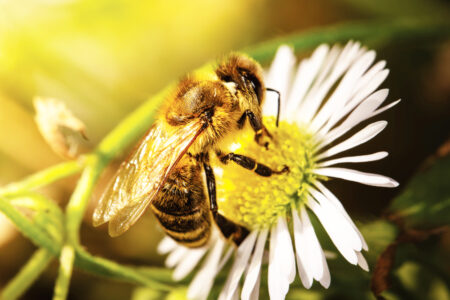
About 75% of flowering plants rely on pollination to some degree. There are many pollinators, including insects, birds and mammals, but bees are the ones we focus on because of their high visibility and numbers. Their lives are spent collecting pollen, taking it back to their hive to feed offspring, and transferring the pollen to flowers, which encourages plant reproduction.
Bees are amazing insects, as is bee anatomy. The eyes of bees are compound, on the sides of their head. Additionally, three eyes, called ocelli, are found on the top of their head. They help detect light intensity and orientation, aiding navigation.
Many flowers have "nectar guides," which are color patterns that guide pollinators to a flower's center where the nectar and pollen are found. This also encourages them to perform the "Waggle Dance," an intricate way to communicate information by providing direction and distance for various food sources to other worker bees in their hive.
Because of the ultraviolet spectrum, bees view flowers differently than humans. Unable to recognize the color red, beekeepers use this knowledge for researching bee colonies, thus disturbing them as little as possible.
Referred to as "pile," the hair on bees is "branched" rather than straight. According to the University of Florida, as the bee flies, she is building an electrostatic charge because of the interaction of the air. As she lands on a bloom, this charge causes the pollen to stick to her hair, trapping more pollen to be collected. The pollen on both her back legs and hair will be brought back to her colony if some of it is not left on another flower.
All bees have three main body parts -- the head, thorax and abdomen -- one pair of antennae, three pairs of legs and two pairs of wings. The antennae have segmented feelers for sensing air movement and scents.
The proboscis works like a straw, sucking flower nectar, and at the same time pollen is trapped in a bee's hair, transporting it from the anther (male) to the pistil (female) of a flower.
There are many more details if you are studying this fascinating insect. Some bees are solitary, while others are social. Some hives are found in trees or bushes, others in the ground. Just observing the actions of bees visiting our vegetables and flowers can be a learning experience, and recognizing the various types of bees helps to understand their individual habits. With summer approaching, we will welcome our very busy worker bees in our gardens.