
To Your Good Health: Stubborn case of jock itch
DEAR DR. ROACH: I am a 74-year-old male, and for the past two years, I have been unable to rid myself of a stubborn case of jock itch. I have tried all of the over-the-counter ointments, powders, and antifungal and antibacterial soaps without success. My dermatologist prescribed econazole nitrate cream 1%, which keeps it from getting worse but does not rid me of the problem. Do you have any other recommendations on how to treat this?
— I.F.
ANSWER: The first concern is whether the diagnosis is correct. Many people are able to recognize the typical symptoms of tinea cruris, aka the fungal infection that is commonly called “jock itch.” But there are different fungi and even bacteria that can mimic the infection and do not respond to the usual treatments. Even seborrheic dermatitis and psoriasis may be confused for jock itch.
Given how long this has been going on, I would expect your dermatologist to perform a scraping and culture of the infected area so that the microbiology lab can identify the condition correctly.
If it is Trichophytin rubrum, which is the usual cause of jock itch, then recalcitrant cases can often be effectively treated with oral antifungal agents such as terbinafine. You can give your treatment a better chance by keeping the area dry (with dessicant powders such as corn starch) and avoiding tight-fitting clothing. Cotton is your friend because it allows air to pass through easily.
DEAR DR. ROACH: I have had peripheral neuropathy in my feet for over a year. I feel like I am walking on glass sometimes or on sharp stones. I cannot walk barefoot. I have seen a podiatrist and neurologist, but they are no help.
Is there any cure or treatments that could help? — S.S.
ANSWER: “Neuropathy” is a general term for a nerve problem, and “peripheral neuropathy” specifies that the problem is not in the spinal cord. There are many causes of neuropathy, but unfortunately, few of them have specific remedies.
One exception is when there is direct pressure on a nerve. Relieving the pressure can solve the problem, although the degree of recovery is never certain. An EMG (electromyography) test is the first step in trying to identify the cause of a neuropathy, but imaging (like a CT scan or an MRI) may be used if nerve compression is suspected. There are many rare causes; Lyme disease is endemic where I practice, so a blood test for Lyme is always prudent.
Diabetic neuropathy is the most common cause of nerve pain in both feet that I see. In these cases, getting the diabetes under better control can help.
Lifestyles

Bridge by Steve Becker
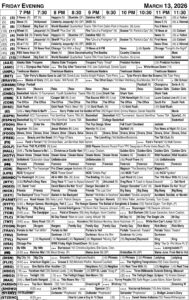
Friday evening TV
Dementia Live training offers eye-opening experience
Communication is not just words spoken by one and listening by another. Communication involves body language, voice ...

Safe ways seniors can lose weight
To Your Good Health: Stubborn case of jock itch
DEAR DR. ROACH: I am a 74-year-old male, and for the past two years, I have been unable to rid myself of a stubborn ...
Hints from Heloise: Prefers digital edition
DEAR HELOISE: I understand that some people prefer reading an old-fashioned newspaper, but there are many ...