
Scammers and the art of garbage-in, garbage-out

Metro Creative
Every day another senior living in the Valley loses a chunk of their life savings to a scammer.
Sitting behind a computer, often on the other side of the world, scammers go through their playbook and take down another older adult who has pretty much done everything right for their whole life — studied hard in school, performed military service, raised a family and made sure to pay their taxes on time. It hardly seems fair when a lazy criminal, sitting anywhere on the planet, now has a computer and even a fiber-optic connection to trick a senior out of their hard-earned money at the speed of light.
But we don’t just have to sit and wait to be fleeced. We can fight back by knowing how to sidestep the growing legions of digital evildoers.
First of all, understand that scammers are just common criminals who rob, cheat, lie and steal from vulnerable seniors who were brought up in a culture of trust, have a poor understanding of digital technologies, and, through careful and frugal living, have accumulated a nest egg of significant financial value.
Although scammers are only the modern incarnation of the conniving village thief, they are anything but stupid. “Bold as brass,” as my departed mother would say, scammers routinely masquerade as government investigators, police officers, court officials, postal employees, utility workers, bank officers or other identities and roles we have been conditioned to respect. A scammer will absolutely tell any boldfaced lie to steal your money to the very last cent.
There is an old information technology saying that says, “garbage-in, garbage-out.” Our computers and “smart” phones are just machines, set up to instantly relay whatever a sender comes up with. You would think that it would be highly illegal for a crook to send you a message with a Secret Service or FBI logo — well, it is, but the internet is designed to freely pass along anything without delay. No checks, no balances, just a free-for-all, from one side of the planet to the other. So, from now on, whenever you receive a call, text or email message, know that it was delivered to you automatically, as quickly as possible, with no oversight from anyone at all.
Knowing that anyone can send you anything, anytime, with no regard to legality, it makes sense to be instantly on guard against messages or calls saying you need to start sending, transferring or moving your money around. Ignore texts and calls from anyone you believe to be a government official or authority. Never, ever, click a link in a message to follow up on the notice of some kind of fraud or that you’ve somehow fallen afoul of the law enforcement community.
Regardless of how official the message looks, and no matter what symbols and logos accompany the message, know that it was just “garbage-in,” and when you receive it at your end, it is “garbage-out.”
I am dumbfounded to watch local news stories about seniors reporting the loss of their life savings to scammers claiming to be from federal agencies, banks or law enforcement. And if you believe that you are somehow immune from the scamming scourge, you are living in a fool’s paradise.
Some simple rules to live by:
• Avoid social media. Though many of you have become addicted to it, stop using it.
• Do not hang around internet dating sites.
• Ignore phone calls from unknown callers.
• Do not respond to texts from unknown senders and never click a link in such a text.
• Never respond to any call, text or email from anyone claiming to be from any government or law enforcement agency.
• Avoid anyone convincing you to convert your assets into gold, silver or other precious metals.
• If advised to convert your assets into cryptocurrency for any reason, disengage.
• When asked to confirm your identity for any purpose, delete the message or hang up.
• Avoid internet game sites where you suddenly find yourself chatting with random people from anywhere in the world. Scammers love these sites.
• Never trust anyone claiming to be from an information technology company saying there is a problem with your computer. Your problem is that a scammer has found you.
• Remember that if that little voice is tugging at you, saying “this is too good to be true,” trust that little voice and immediately stop what you’re doing.
Most of us have worked hard to live a good, honest life and put away something for our “golden years.” Scams are on a trajectory to just get worse, but realize that you do control your fate with your fingertips as they fly around your computer keys and smartphone buttons. Pay attention to scam reports in the news, and learn the painful lessons of others who have lost everything to a slick, digitally-enabled crook.
Put down that smartphone, turn off your computer and start planning for spring. It’s hard to believe that in a place where it can go to -20 degrees, it will ever get warm and green again. But it’s already happening — at least, the “warmer” part.
The best part about winter is that it does eventually come to an end. I’m already looking forward to a few unhealthy corn dogs (slathered in mustard) at the Canfield Fair.
Lifestyles
Dear Annie: A family wedding, minus one not on guest list
DEAR ANNIE: Am I being too sensitive? My niece’s son is getting married this year. I always believed I was close ...
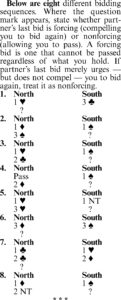
Bridge by Steve Becker

Friday evening TV
To Your Good Health: Patient questions risk from RA drug
DEAR DR. ROACH: I’m 72 years old, and I have been prescribed azathioprine for rheumatoid arthritis (RA). I have ...
Hints from Heloise: Popsicles not good snack for children
DEAR HELOISE: To Susan L., as a retired registered dietitian who specialized in pediatrics, I absolutely do not ...
Building patience: A 24-year love story with Legos
After 24 years together, Mike and I discovered that love, patience and teamwork can appear in the most unexpected ...