
Bridge by Steve Becker
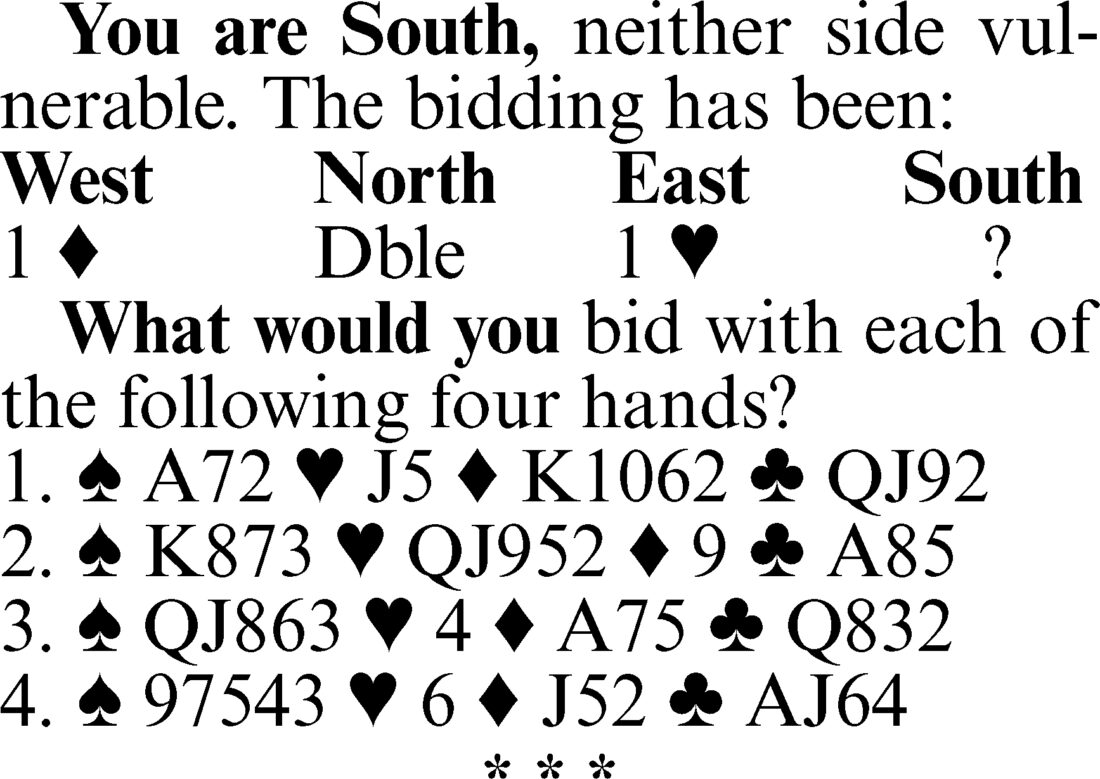
1. Two notrump. When partner doubles for takeout at his first turn to bid, he implies support for the unbid suits and at least the values for an opening bid. In replying to the double, you should attempt to show the degree of strength you have in much the same way as you would if he had opened the bidding.
While East’s one heart bid relieves you of the obligation to respond, this 11-point hand might produce a game opposite a double, so a jump to two notrump (invitational) is in order. The absence of a heart stopper should not deter you from bidding notrump, as partner is virtually certain to have some heart strength for his double.
2. Double. Something is rotten in the state of Denmark. East is probably fooling around, and the best way to expose this is by doubling. If the bidding now takes a new turn, which is highly likely, you can next show your spades. Partner will thus learn that you have heart and spade length as well as the high-card strength necessary for such bidding.
3. Two spades. This hand offers a good chance for game opposite a typical takeout double, and you should let partner know this by jumping to two spades (invitational). Partner’s double implies spade support, so the only question is how strong his hand is. If you evaluate your hand on a point-count basis, you have nine points in high cards and three more points for your singleton heart. Some players might even jump directly to four spades, which is certainly a reasonable alternative.
4. One spade. You have ample strength for a voluntary response, so you should speak up right now. Though your spades are nothing to brag about, you have to make do with what you were dealt. Remember that you are leaning on an opening bid and implied spade support from partner. To pass at this point, in effect telling partner that you are perfectly happy to let the opponents play in one heart, is inconceivable.
Tomorrow: A precautionary measure.
Lifestyles
Looking at assisted living?
NEW YORK — Sometimes it’s a fall that brings a broken hip and a loss of mobility. Or memory problems that ...
Hints from Heloise: Shower caps in garden
DEAR HELOISE: Here’s an idea that I’ve benefited from for years. Whenever I stay in a hotel, I save the shower ...
To Your Good Health: Husband hit by sudden case of delirium
DEAR DR. ROACH: Over a 30-day period, my 84-year-old husband went from being mentally sharp, to going into a fog, ...
4 tips to save moneya and stay well this seasonsd
StatePoint The beginning of the year is a natural time for a reset, especially when it comes to budgets and ...
Bridge by Steve Becker
You really should take this information to heart
February is the American Heart month and with that we should really think about what keeps our hearts healthy as we ...