
Muscle spasms after surgery give concern for a stroke
To Your Good Health
DEAR DR. ROACH: In 2021, I drove to the hospital with chest and back pain. I was told that I needed an emergency surgery to remove my gallbladder. During the procedure, I suffered a heart rhythm disturbance, which they were able to stabilize. (Months later, a doctor indicated that they had to use electrodes to rectify my heartbeat during surgery.)
Postop, however, I discovered that I could no longer drive because my driving leg was acutely weak and would spasm uncontrollably. It was a year until I drove again — and still, only locally. Everybody said these symptoms must have been preexisting, but the truth is that I drove fine prior to the surgery. What could account for this?
— G.S.
ANSWER: A very good rule for physicians to live by is to believe the patient. The sudden onset of a new neurological symptom, especially weakness, suggests a stroke. Supporting this is that you had two risk factors for a stroke: Any surgery puts a person at a small increased risk for a stroke, but a new arrythmia makes this risk go much higher. Since they used electricity to stop the rhythm, this suggests a serious rhythm disturbance.
Muscle spasms are common after a stroke. They often get better over time, as does a person’s strength. However, I am disappointed that nobody apparently thought of a stroke since you should have had imaging of your head (such as a CT scan or an MRI scan).
If you did have a stroke, you should at least have had therapy after the stroke. Most people benefit from treatment to dissolve the blood clot that is the cause of most strokes, but this may not have been possible during the postoperative period.
At this point, I still think it would be helpful for you to know what the rhythm was. If it was atrial fibrillation, it would be prudent to monitor your heart to see if you are having any further episodes, as this would put you at risk for another stroke. Also, if you were my patient, I would still get an imaging study of your head to see whether my concern of a stroke is justified, or whether there is some other reason they can see for the sudden weakness.
There are other causes of leg weakness around the time of surgery. If they gave you spinal anesthesia, it’s possible that the nerve was damaged or a blood clot pressed on a nerve, but the long duration of weakness after surgery really has me concerned for a stroke.
Dr. Roach regrets that he is unable to answer individual letters, but will incorporate them in the column whenever possible. Readers may email questions to ToYourGoodHealth@med.cornell.edu.
Lifestyles
Muscle spasms after surgery give concern for a stroke
DEAR DR. ROACH: In 2021, I drove to the hospital with chest and back pain. I was told that I needed an emergency ...
Marriage suffering as husband grows distant
DEAR ANNIE: I’m writing because I feel embarrassed even admitting this, but I’m starting to dread parts of my ...

Flu season surged over the holiday and rivals last winter’s epidemic
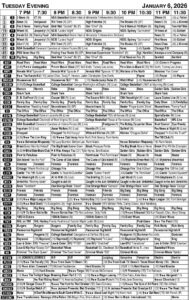
TV listing: Tuesday, Jan. 6, 2026

Keep it simple when trying to improve health, wellness
Hidden cirrhosis has many causes
DEAR DR. ROACH: My friend has cryptogenic cirrhosis. She says that the doctors don’t know what causes it. Where ...