
Diuretics do not provide much help for venous insufficiency
To Your Good Health
DEAR DR. ROACH: Your recent column regarding edema from venous insufficiency caught my interest since I was diagnosed with venous insufficiency over 25 years ago. Your recommendation was to raise your legs several times a day for 20 minutes a day, if I recall. Also, you mentioned that sometimes furosemide (Lasix) is prescribed but that you prefer not to recommend this method. My question is why?
I have been using 20 mg of furosemide almost daily for several years, and it seemed to help. I was told that it robs the body from vitamin B, so I do take supplemental vitamin B. Why not use furosemide to treat edema from venous insufficiency?
— M.B.
ANSWER: Venous insufficiency is a condition where the pressure inside the veins is high enough that fluid comes out of the blood vessels and goes into the tissues. Fluid in the tissues is called edema. In most cases, the valves in the veins that prevent the backup of blood fail, leading to high pressure in the veins and dilated, swollen (“varicose”) veins. But chronic venous insufficiency may also happen after damage to the blood vessels, such as a blood clot.
Fluid can also come out of structurally normal veins when the oncotic pressure (the tendency for fluid to stay in the veins due to proteins in the blood) is low. This happens because of the loss of proteins from kidney or liver disease or severe malnutrition.
Diuretics are often used to treat excess fluid from heart failure, but even if your blood pressure goes way down, diuretics do not appreciably reduce the pressure in the small vessels in your legs, which is what is driving fluid out. Diuretics like furosemide have no role in the treatment of chronic venous insufficiency, but unfortunately, I still see them used frequently. However, a person can have both heart failure and venous insufficiency and may require a diuretic like furosemide.
The main conservative treatment for venous insufficiency without other underlying conditions, in addition to periodic leg elevation, is support stockings, which increase the pressure in surrounding tissues so that the fluid does not leak out of the veins. Many of my patients don’t like them; the stockings are very tight when people first put them on, but as they work and the legs get less swollen, they aren’t as tight and become more comfortable.
They can also be hard to put on, especially by yourself, but there are devices like “stocking donners” that make it much easier. Stockings should be removed at night. There are also many companies now that make stockings that aren’t as hideously ugly as they were in the past.
Lifestyles
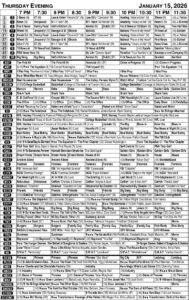
TV lisiting: Thursday, Oct. 15, 2026
Starting fires with rolls of cardboard
DEAR HELOISE: My mother-in-law taught me a neat little trick that helped me get a fire started in my fireplace. She ...
Bridge by Steve Becker
It happened in Dead Man’s Gulch many years ago. Twelve good men and true listened attentively to the evidence. ...
Diuretics do not provide much help for venous insufficiency
DEAR DR. ROACH: Your recent column regarding edema from venous insufficiency caught my interest since I was ...
Learning how to heal after dating a narcissist
DEAR ANNIE: After dating a guy who turned out to be a narcissist, my question is, how can I heal? I’ve tried ...
HINTS FROM HELOISE: Reader sounds off on travel
DEAR HELOISE: I asked you to remind readers of the environmental harms of tourism travel so that they might ...