Christmas cactus requires work
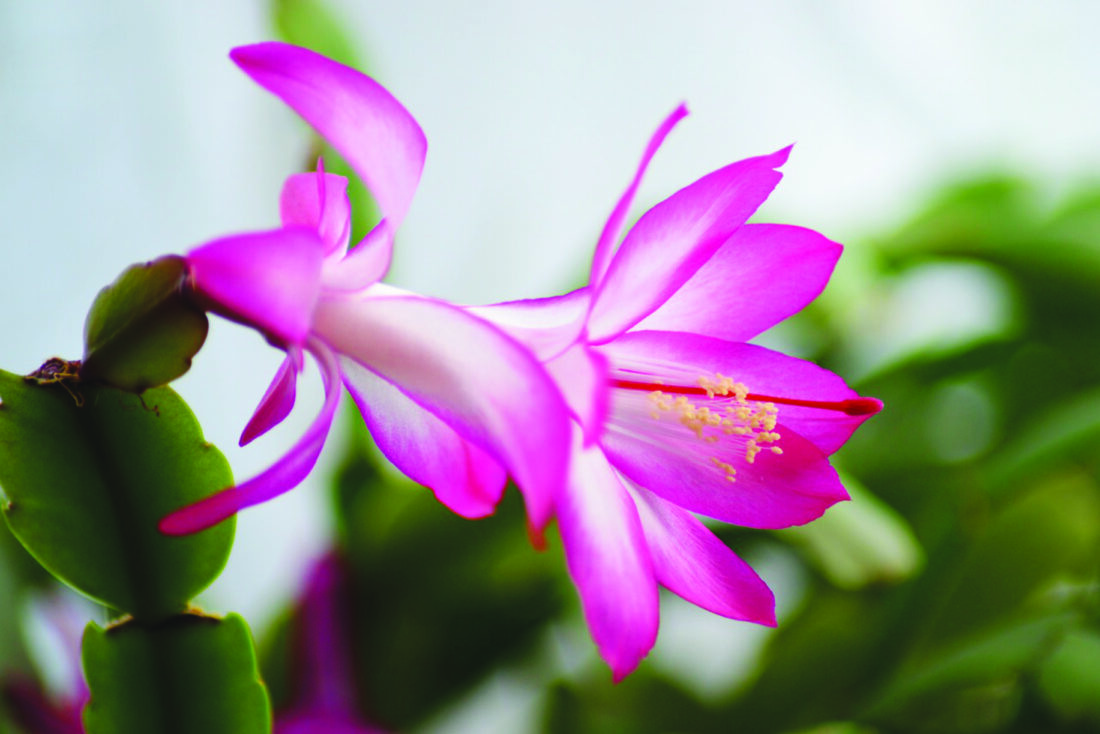
There are three main holiday-blooming cacti: the Thanksgiving cactus (Schlumbergera truncata), the Christmas cactus (Schlumbergera Ö buckleyi), and the Easter cactus (Schlumbergera gaertneri). The care for all three is fairly similar; the main difference is their bloom times.
My granny Miller’s only houseplant was a Christmas cactus that sat on a wood pestle. When she passed, I declined inheritance of the plant as I am houseplant challenged and would have felt terrible if it perished in my care. To this day I have no houseplants; I know my limits.
A tropical plant has special needs to keep it healthy. Water it by soaking the soil until water runs through the pot’s drainage holes. Discard any water left in the drip pan. Remember to water it only when the top inch of soil feels dry.
To increase humidity, set your pot on a tray of pebbles covered with water, making sure the water level stays below the pebbles so the pot is not sitting directly in water.
Fertilize the plant once a month between June and August using a balanced, water-soluble fertilizer diluted to half strength. In the fall, when flower buds begin to form, switch to a fertilizer that is low in nitrogen and higher in phosphorus and potassium, such as a 0-15-10 formulation, to support healthy blooming.
According to University of Minnesota Extension, Christmas cacti initiate flower bud formation as days grow shorter moving into winter, which is why they are referred to as short-day plants. Cool nighttime temperatures are also essential for proper bud development and successful flowering. Both Christmas and Thanksgiving cacti generally require about six weeks of short days to initiate blooming and will flower in late fall through winter. In contrast, Easter cacti need eight to 12 weeks of short-day conditions to form buds and typically bloom in late winter or early spring.
A common problems is bud drop, meaning the temperature is too high, it has insufficient light and it has been under- or overwatered. Pests include mealy bugs, spider mites and fungus.
Propagation is a great way to produce new plants. Start by cutting part of the plant that includes two flat stem segments, then cut further segments at the joints. Ends will start to scab overnight. Place segments upright in a container filled with perlite or coarse sand that has been watered.
To be honest, this is why I don’t “do” houseplants. My holiday cactus would just be wild and blooming whenever they felt like it. That would be an accomplishment as it would mean they were still living! I’ll just admire other people’s holiday cacti instead.
Lifestyles
Bridge by Steve Becker
The outcome of most deals depends on a combination of luck and skill. Sometimes the two come in equal measures, but ...
Valley Grows calendar
Here are upcoming gardening events through the Ohio State University Extension Office. For more information and a ...
Dear Annie: A blah marriage begs for some spicing up
EDITOR’S NOTE: Annie Lane is off this week. The following column was previously released in 2022 DEAR ANNIE: ...
Hints from Heloise: Nest dishes when filling dishwasher
DEAR HELOISE: Thank you for the time-saving, informative and interesting hints that you and your faithful readers ...
Dr. Roach: Comparing and picking cow’s milk alternatives
DEAR DR. ROACH: Everyone in my family except for me has converted to using almond milk instead of cow’s milk. I ...