
Trending
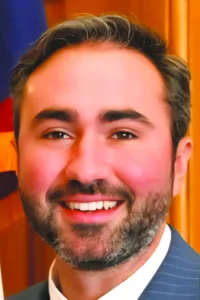
The Ohio House passed a bill, sponsored by state Rep. David Thomas, to eliminate taxes on any food purchased from vending machines and micro-markets.
The House passed the bill 91-2. Thomas, R-Jefferson, whose district includes portions of Trumbull County, sponsored the bill with state Rep. Beth Lear, R-Galena.
It was introduced March 17 and voted out of the House Ways and Means Committee on June 9.
Under current law, Thomas said, the Ohio Department of Taxation decides if food purchases from vending machines and self-service micro-markets, where people buy food at self-checkout kiosks, are taxed based on their proximity to tables and chairs.
If the machines or micro-markets are within 20 feet of tables and chairs, the food purchased is taxed similar to the state's eat-in tax, Thomas said. If they're not within 20 feet of tables and chairs, there is no tax, he said.
Thomas said: "When the cost to comply is greater than the tax revenue, that tax should be eliminated. This commonsense legislation eliminates confusion for businesses, simplifies tax compliance and ensures Ohioans are not unfairly taxed on food purchases."
Businesses are required to do additional work on sales tax and other work to determine what part of their sales are subject to taxes, which Thomas said is unnecessary and would be eliminated under his bill.
Thomas said the bill builds on the state's constitutional prohibition against taxing food purchased for consumption off the premises and provides the needed clarity for consumers and businesses.
Thomas said he also wants to look in the future at eliminating the state's eat-in tax.
With the state Legislature in lame duck session through the end of the year, Thomas said he is optimistic his bill to eliminate taxes on foods purchased from vending machines and micro-markets will be passed.
Thomas said he expects the state Senate to include the bill as a piece of a large package and then have that come to the Ohio House for approval before the year ends.
The Republican-controlled state Legislature is trying to get as many bills passed before the end of the year. Starting Jan. 1, Republicans will no longer have a supermajority in the House and with Democrat Amy Acton taking over as governor Jan. 12, bills passed by Republicans will be subject to vetoes. Without a supermajority, Republicans won't have the numbers to override any Acton vetoes if Democrats don't join them.
Thomas, who has had a number of bills vetoed by Gov. Mike DeWine, a fellow Republican, said the GOP losing the supermajority "will be more complex (to pass legislation). Ironically, for all the hate I get, I'm one of the most bipartisan members. I often work with Democrats and have sponsored several bills with Democrats."