
Tupac killer gets 40 years to life
Trending
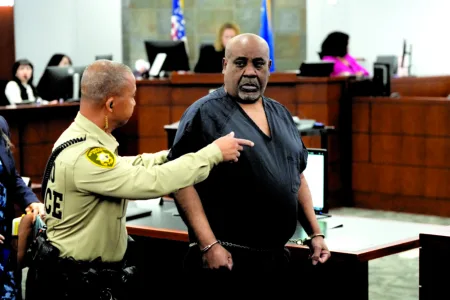
LAS VEGAS (AP) -- An aging ex-gang leader was sentenced Tuesday to 40 years to life in prison for orchestrating the 1996 drive-by shooting of rap icon Tupac Shakur near the Las Vegas Strip.
The killing, rooted in a long-running gang feud, had gone unsolved for decades -- captivating the public and tormenting Shakur's loved ones -- until Duane "Keffe D" Davis started bragging about it in interviews and a memoir.
Davis, 63, was convicted in August of first-degree murder with the use of a deadly weapon. A former leader of the South Side Compton Crips, Davis stared blankly at Judge Carli Kierny as she imposed a penalty that, even with credit for time served, won't see him eligible for parole until he's at least 100.
"You don't get to take a man from his family, you don't get to take his very life, his whole future from him and just walk away from it, especially when that man is Tupac Shakur," Kierny said. "The world never forgot about him and his death and neither did Las Vegas."
Davis, whose lawyer said he will appeal his conviction, is the only person ever charged in Shakur's death. The late rapper's legend has only grown in the years since, and his songs continue to resonate with themes of hardship, love and black struggles.
FAMILY LOSS
Shakur's sister, Sekyiwa "Set" Shakur, said it was hard listening over and over again to Davis describe how he hunted and killed her brother, cutting him down at age 25, just as his popularity as a musician and actor was peaking.
Gentle and kind, Shakur was his family's protector, she said. Had he survived injuries that included the loss of a lung, he would have left rapping behind and delved into activism, treading the path of luminaries such as Malcolm X and Martin Luther King Jr., and perhaps even politics, she said.
"This man's life mattered," Sekyiwa Shakur said as family members cried in the audience.
Shakur's brother, Maurice "Mopreme" Shakur, said the killing has been "devastating, heartbreaking and sad" for him, his family and Shakur's fans.
Davis spoke briefly in court, telling the judge he wanted pictures and other items that police took from his house. Asked if there was anything else he wanted to say, Davis said: "No, I'm good."
Davis was charged after giving interviews and publishing a tell-all memoir in 2019 detailing what he said was his role in the infamous shooting.
On the night of Sept. 7, 1996, Shakur was in the passenger seat of a black BMW with music mogul Marion "Suge" Knight when a white Cadillac pulled up at a red light. Shots erupted. Shakur was hit multiple times and died six days later, while Knight survived.
In his memoir, Davis explained he was seeking retaliation for Shakur and his entourage beating up Davis' nephew hours before the shooting. He said he was in the passenger seat of the Cadillac and passed the gun to the backseat, where shots were fired. Davis spoke to detectives years before but avoided prosecution because of an agreement he made with law enforcement.
During the weekslong trial, prosecutors relied on Davis' own statements to law enforcement and documentarians. They argued Davis orchestrated the shooting and provided the gun used in Shakur's death, which was the result of a rivalry between the South Side Compton Crips and Mob Piru. Davis' defense attorney pointed to a lack of physical evidence that connected his client to the 30-year-old crime, and he portrayed Davis as a liar who was trying to make money.
After nine days of hearing testimony in August, the jury deliberated for three hours before turning over the guilty verdict.