
Chief tells crisis trainees to take ‘the little extra time’
Trending
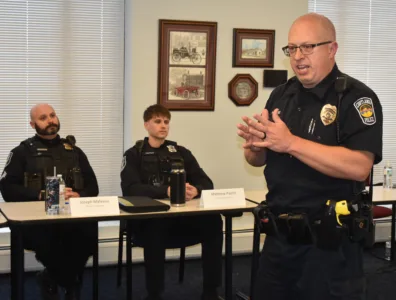
WARREN -- Cortland police Chief David Morris told the 27 newest graduates of the Trumbull County Crisis Intervention Training class he hopes the weeklong training gives them the type of attitude Morris saw in a medical professional who provided care to Morris' father last year.
Morris said the woman took "the little extra time" to truly help out his father when he went in to have a cancerous spot checked out.
"You can check some boxes, if you will, when you handle mental illness or you can take the little extra time," Morris told the officers.
Morris helps Daniela Ghizzoni, director of clinical services for the Trumbull County Mental Health and Recovery Board, in teaching the class because he has been a police officer for many years and Ghizzoni hasn't.
"The girl who did the biopsy could have just checked the box. She could have took the biopsy, sent it off, a couple weeks later, come back, we knew it was cancer," Morris said, "But she took the time that day when she did the biopsy to dig it out.
"She went beyond just checking the box. She probably saved his life. It was a pretty serious cancer. She happened to get it all out."
Morris said the woman "made the comment to another nurse in the room, kind of under her breath, 'That's what I would do if it was my dad.'"
Morris told the officers he hopes that when they deal with people in crisis: "They may not mean a whole lot to you. They may just be another call. But when you take those few couple minutes like that nurse did, it made all the difference in the world for our family."
He encouraged the officers to "do more than just check the box. Apply the training, but also put some heart into it and take some time with it."
Tuesday was graduation day for the CIT class, which was made up of officers from many police departments around the county -- large and small -- including Warren, Hubbard, Girard, Vienna and others.
“The training is to "help the officers figure out how to handle crisis calls. They are typically the first person called when something is going on. It teaches them interventions to help with these individuals," Ghizzoni said.
It teaches officers to observe "how people are communicating, the way they are standing, they way they are presenting themselves, and it also gives them a little bit of a foundational basis on mental illness and issues the officers will encounter as an officer.”
They also learn about the resources available in the community for such people.
"They get to go on visits to difference sites in the community to understand how such facilities operate. The officer can then feel more confidence knowing "Hey, I've been there. This is what they do' or 'It's really nice.'"
The officers went to the Coleman Crisis Center in Warren and First Step Recovery in Warren, a drug detox center, Ghizzoni said. She said when the officers are talking to a person in crisis, they can tell them and family members about available services for the person.
Ghizzoni told the officers she is "always available for you guys if you need anything or have any questions.”
When she introduced Morris, she admitted, "I don't know a whole hell of a lot about your world. So that's kind of where Chief (Morris) came in and helped me out."
One of the new CIT trainees, Stephen Patrick of the Girard Police Department, said some of the calls officers handle involve emotional health and people in crisis.
"When people are coming in contact with police officers, it's usually the worst day of their lives. They are not calling to say ‘hello. How are you doing? Thank you, guys.’"
He said, "They are calling us because they are going through a crisis and need help. I think the course is fundamental in helping police to extend the knowledge in our tool belt so we can better interact with people, offer better de-escalation skills and we can offer an incredible amount of resources to people who are going through crisis, whether that be emotional behavior health or simply if an individual could be homeless."
He said being able to make them aware of the 988 and 211 hotlines that are available to help such people 24/7/365, which Patrick said is "great for us," especially when working evenings and overnight.
He said the class is "phenomenal for officer communication and de-escalation, and I believe that is a fundamental aspect of our job."