
Trending
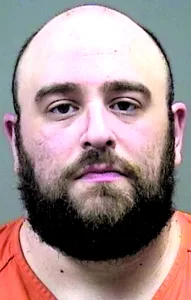
CANFIELD -- A judge ruled that evidence a man who allegedly lunged at Democratic governor candidate Amy Acton possessed weapons at the time of the altercation cannot be used in his case.
Mahoning County Area Court Judge Molly K. Johnson ruled Thursday in favor of a motion filed by the attorney for Patrick Havas, 38, of Canfield, to exclude that evidence.
Havas faces four misdemeanor charges - two counts of assault and one count each of inducing panic and disorderly conduct - related to the Sept. 6 incident at the county Democratic Party tent at the Canfield Fair.
Havas was walking toward Acton when two Ohio State Highway Patrol officers perceived him as a threat and confronted him. As that was happening, two people in the tent were knocked to the ground, receiving treatment from nurses at the fair and not taken to the hospital, according to Johnson's decision.
J. Gerald Ingram, Havas' attorney, filed an Oct. 1 motion requesting Johnson not permit evidence that his client had weapons - two .22-caliber handguns and a pair of taser brass knuckles - in his possession, which is key to the inducing panic charge.
Mahoning County Prosecutor Lynn Maro on Oct. 14 urged Johnson to reject the motion, writing: "In this case, evidence of the defendant possessing firearms and brass knuckles is significant because it is directly relevant to the inducing panic charge, which has been filed against the defendant."
No weapons were brandished or removed from their holsters, according to law enforcement reports and Maro.
Ingram's motion stated that during the discovery phase of the case it was established "that no bystander was aware the defendant was in possession of a firearm while in the Democratic tent," and only one witness claimed to have seen Havas with a firearm after he was taken from the tent.
Twelve witnesses in addition to two state highway officers and a Canfield police officer provided statements.
Johnson rejected Maro's argument that a witness may have panicked simply because they saw a holstered gun.
Johnson wrote: "While this argument may hold water in other parts of the country or the world, Ohio is an open carry state. The mere sight of a small, holstered handgun - particularly at a rural agricultural function - does not automatically induce panic in the state of Ohio."
Johnson wrote in her decision that 13 months ago, Dave Yost, who was attorney general at the time, made it clear that lawfully carrying weapons at a fair is legal.
Johnson wrote: "But the state's argument doesn't end there. It asks the court to determine that the public was caused more serious inconvenience or alarm because a single witness saw a holstered handgun after the fact. Specifically, as the defendant was being escorted away from the public in the custody of two state highway patrol officers. The state's argument in this regard can only be described as illogical. Thus, the sight of the lawfully carried and holstered gun could not have caused more serious inconvenience or alarm."
She concluded, "The weapons evidence does not make any consequential fact more or less probable and is therefore irrelevant and inadmissible."
Maro added a count of inducing panic at Havas' Sept. 8 arraignment. She said she did so "because I thought the reckless conduct causing others to vacate the tent and to cause that commotion fit the circumstances."
For Havas to be convicted of inducing panic, he would have to be found guilty of one of the other charges he faces.
Maro also told The Vindicator after the arraignment: "I know others thought there should have been charges related to the weapons. The weapons were never unholstered, removed, used, brandished in any way, utilized in this incident. Quite frankly, there were no charges under the Ohio Revised Code that would fit for simply possession of those weapons."
Ingram used that statement in his arguments about not including the weapons evidence in this case.
A pretrial in this case is set for Nov. 6.
Havas' charges are related only to injuries to the two people in the crowd and that he allegedly caused a panic.
While Havas allegedly pushed his way toward Acton to get to her, Maro said he never had any contact with the gubernatorial candidate and "never gets near her." Acton was "a victim of the inducing panic charge," Maro said.