
Packard museum adds 1953 ragtop to collectionv
Trending
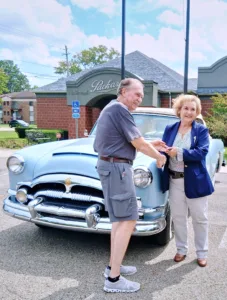
WARREN -- A 1953 Packard Caribbean Sports Convertible is the latest addition to the National Packard Museum's permanent collection.
The vehicle was delivered Tuesday from North Carolina, and was donated by Robert Ryan. It's an important car in telling the history of Packard's final decade and represents the first year of Packard's Caribbean line.
"What James Lance (Packard Motor Car Company's newly appointed CEO in 1952) was trying to do was bring Packard back to the top in terms of most desirable car," said Mary Ann Porinchak, executive director of the museum. "It had all the options on it, all the goodies, and had beautiful colors. It was just a really, really nice vehicle. Made people feel like they were on the island somewhere. It represents the very first part of Packard's launch to get back to the top."
And it was successful too. Designed by Packard's chief stylist, Richard Teague, the Caribbean transformed Packard's traditional ragtop into something closer to a European style sports convertible.
Only 750 Caribbeans were made in 1953, and it outsold the Cadillac El Dorado, its primary competition in the luxury car market.
It's a perfect addition to the museum's current exhibition, "Packard's Fabulous Fifties," which chronicles that last decade.
"We didn't know it was coming when we put the exhibit together but, oddly enough, we had a space in between the cars so that people could walk through the lineup, and this car fit very nicely right in that space," Porinchak said. "We're now showing a more complete picture of what happened in the '50s."
Ryan initially reached out last year about donating the vehicle. Porinchak encouraged him to wait until its upcoming storage building and maintenance area were completed. A construction crew installed footers for the 7,463-square-foot addition this week.
"Earlier this year, he emailed me, 'Ready or not, here I come,'" Porinchak said.
Plenty of preparation and research is involved before the museum accepts a vehicle. Porinchak said they get detailed information and photographs so they know exactly what is being offered and its condition.
That wasn't always the case.
"Years ago we didn't know enough to do that," she said. "We had a gentleman show up with a trailer that looked like it needed to be hauled to the junkyard (not displayed in a museum). It was just a chassis, and it wasn't even a complete one. He was telling us what a wonderful piece it was, and it wasn't. He just wanted to get it out of his property.
"Now we're very thorough in our questions before we agree to accept the car. We don't have the resources to restore a vehicle. In fact, most owners don't have the resources to do that anymore. It's a very costly process, so we pretty much take cars that are complete or all original."
The 1953 Caribbean couldn't have been in better shape, and he also included 1953 Packard paint samples and the information book about how to operate and maintain the vehicle.
"It's pristine," Porinchak said. "I sat in this car to drive around to the back of the museum to bring it in. I was almost afraid to sit on the seats and step on the carpeting. He said, 'I kept those covered all the years that I had it,' and he was right. It looks brand new."