
Cortland fire chief to retire
Trending
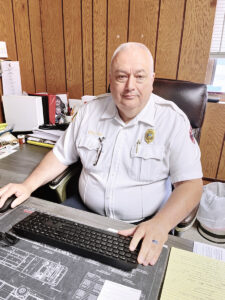
CORTLAND -- After serving the Cortland community for the past 33 years in various fire department roles, fire Chief David Rea plans to step down for retirement.
Rea will retire July 23 having worked in the firefighting field since age 18.
In 1993, Rea started working with Bazetta-Cortland Joint EMS District and in 1995 when the fire district was dissolved, he came to Cortland.
While in Cortland, Rea has served as a firefighter/paramedic, a captain/paramedic and chief for the past 14 years.
Rea said when he was in high school, a girl he dated had a brother who was a volunteer firefighter and showed him what he was doing at the McKinley Heights Fire Department.
"I saw what it was like working at the fire station. I spent a little time at Youngstown State University studying structural engineering and then decided to give the fire service a try,'' Rea said.
When he turned 18, he applied to several fire departments that all had waiting lists in the 1990s then for full-time and volunteer positions.
"I soon got put on as a volunteer firefighter,'' he said.
Rea said the biggest change he has seen since the 1990s is younger people losing interest in entering the fire service field.
"The volunteer service is slowly dying. People today are working full-time and will go home after work and not volunteer time. Both parents are working with some having two or three jobs with no time to volunteer," Rea said.
Rea said years ago, people worked at Packard and GM and many would have the time to go to fire departments and put in volunteer hours. He said many moms would stay at home to be with the children with dads working.
"That is not the way of our society any more. Both parents need to work,'' Rea said.
Rea said Cortland is a busy department, averaging five to six calls per day, with most being medical and EMS calls. In addition to fires and vehicle crashes, there is a call once in a while to rescue a cat or dog in a house fire or often ducks in the sewer.
Rea said when working in McKinley Heights, he went on a call for a trailer fire and they rescued a basset hound and some kittens.
"We went into the trailer and heard noises in the bedroom and there was a basket full of kittens. At first when I went into the room I thought there was a baby in there but it was the kittens, which we brought out safely,'' Rea said.
He said every once in a while they get an unusual call "that makes you scratch your head."
Rea said he has always enjoyed being part of the community such as the Cortland Lions Club Street Fair parade and overseeing the festival fireworks. He said the fire department inspects all the festival vendors to make sure they meet fire codes.
FUTURE PLANS
While he will be retired from the Cortland Fire Department, Rea said he plans to continue with the paramedic program offered to adults at the Trumbull Career & Technical Center. He is the lead instructor who runs the paramedic course.
He said the next class to complete the program will graduate Wednesday.
"After the high school program offered at TCTC, plans were to offer more paramedic training for fire education service to adults who would be ready to go and work because most fire departments are looking for firefighters/paramedics," Rea said.
He said the adult education program is run by University Hospital with TCTC providing the building and the Howland Training Center providing instructors.
Rea said while he worked the day shift as fire chief, he would go three days a week to instruct at TCTC, including on Saturdays.
EQUIPMENT CHANGES
Rea said another big change is the fire vehicles have gotten much larger over the years.
He said Cortland was able to get a new truck, which is much bigger than the one it replaced.
"Costs for fire trucks and other vehicles have gone through the roof. The fire trucks are doubling in price and they take four years to get. The situation has become obscene if that is a strong enough word to describe it," Rea said.
He said ambulances take more than two years to get and their price has gone up by $100,000.
"It used to take four months from the time the ambulance was ordered to the time it was delivered and now it takes two years. A fire truck order used to take nine months and now it's four years,'' Rea said.
He said to become a firefighter or paramedic, there are more continuing education hours required. Rea said for firefighters it is 56 hours and for paramedics its 72 hours and to be a fire instructor is another 24 hours.
Before he goes, Rea wants to make sure the next chief is prepared.
Taking over as chief will be Todd Price, who serves as administrator for the Johnston EMS program. Price also has worked as a nurse at the St. Elizabeth Hospital mobile intensive care unit.
Price will serve as interim assistant chief so he can be trained and prepared by Rea. Rea said it is more and more common for firefighters to work for different departments whether full-time or volunteer.
Rea said he will help Price over the next 30 days to learn the administrative duties and hit the ground running on the new safety services complex project.
Three captains, Patrick Dales, Price and Jeff Wagner all tested for the chief's position. The Ohio Fire Chiefs Association gave written and oral tests for the opening.
Rea said he and his wife, Paula, like to travel and go to Disney World in Florida.