
Man gets 8 to 12 years for near-fatal Niles stabbing
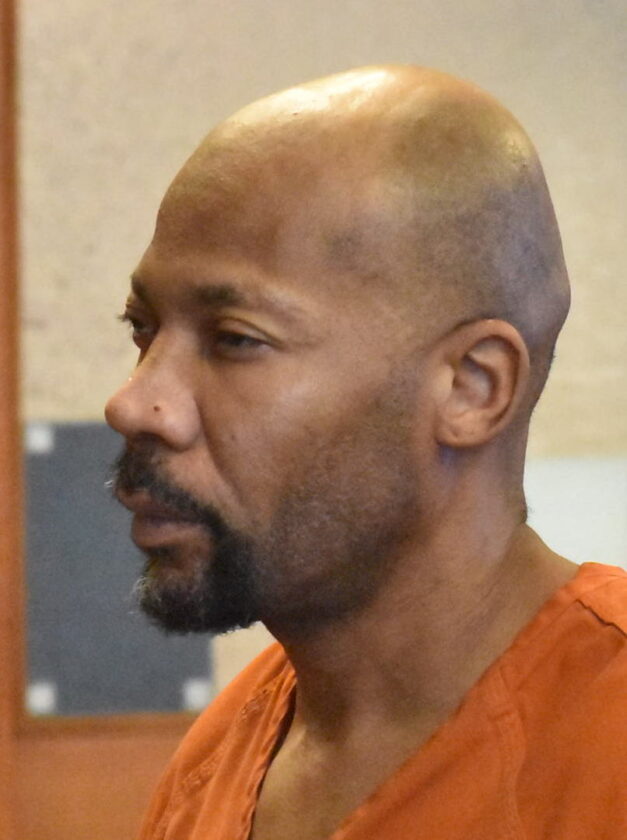
WARREN — Trumbull County Common Pleas Court Judge Sarah Kovoor on Tuesday sentenced Kenyon D. Kellum, 52, to eight to 12 years in prison, the maximum for his felonious assault convictions in the Nov. 5 near-fatal stabbing of a 37-year-old man in front of a restaurant along U.S. 422 in Niles.
A jury found Kellum guilty of felonious assault, but not guilty of attempted murder at the end of Kellum’s trial early last month. During the trial, jurors were able to watch about 90 seconds of cellphone video filmed by a young woman showing the confrontation between Kellum and the other man.
It showed the various hand gestures, postures and movements of the two men and Kellum’s girlfriend handing Kellum a knife, which Kellum eventually swung violently downward into the victim’s left shoulder/neck area.
Trumbull County Assistant Prosecutor Kevin Trapp said in opening statements in the trial that the video makes it clear that Kellum “violently and unnecessarily attacked and stabbed” the other man. He said the victim’s injuries were too severe for him to testify at the trial.
During Tuesday’s hearing, the victim’s father, John Dixon of the Pittsburgh area, displayed photos of his son prior to Kovoor announcing the sentence. Some photos showed his son before him being stabbed.
Some showed him with family and making dishes of food, something he did well as a chef, his father said.
One photo showed his son the way he looks now — in a wheel chair, eyes closed, hands and wrists disfigured from a condition that develops from lack of use.
As the photo was shown, Dixon said it shows his son’s hands “bent out. That’s called tone or spasticity. The brain is damaged, so now until the end of time for him, he has to every single day experience agony and pain of his body spasming. If you have ever had a muscle cramp, I am told it is that on steroids, many times over your entire body.”
Dixon said he and his family are “all about redemption. We are all about second chances.
He said he has gotten surprises over the years when people he has dealt with over the years who he has arrested in his own law enforcement career have “turned their lives around.”
But he said he does not think this case is “about that. I believe it’s about holding somebody accountable. I think it’s about protecting the community, society.” He noted that Kellum’s criminal history is made up of “bookend” crimes — a felonious assault when he was 18 years old and got about 10 years in prison.
“Now he is not a young man. He is 52. He is younger than I am, but he is not a young man. Here, he is making a catastrophic decision that impacted someone’s life forever.”
Dixon said his son “is technically alive, but he’s not there anymore. He will never do any of the things he did before, and we will be maintaining him until we are older than we are now. And at some point in his life, he probably will end up in a home because there will be no other choice.”
Dixon also said after more than 30 years in law enforcement, “I thought I couldn’t see worse, but seeing my own son suffering every day is tough.” He said he does not know what led Kellum to make the decision to stab his son in the chest, adding that “we can almost say we don’t really know exactly how it started.”
Dixon said he heard Kellum’s “version of it” when Kellum testified at his trial, “but that goes unchecked because there was no one else to testify. And the reason there is no one here to testify is because Mr. Kellum in his decision to plunge a knife into my son’s chest, not his shoulder, not poke him in the shoulder. He stabbed him very forcefully in his chest.
“I think we can all say — anyone in this room — that no reasonable person would have ever thought that could happen without catastrophic results,” Dixon said.
He said his son had a son and a future and “a family he cared about, he cares about still. And that is one of the problems here is I tend to talk about him in the past tense. And that is with no intent. It’s just that he’s not the same (son) he was on Nov. 4, 2025. So I think it was important to at least see photos of him and at least let you understand who he is and who he was.”
Dixon showed a photo of his son and his son’s son before the stabbing. He said fishing was one of his son’s great joys. But “he will never, ever be able to do that again.”
PROSECUTOR
Trapp asked for the eight-to-12-year prison sentence Kellum received, noting that the victim is alive and breathing, but “he is not there, and that is what (Kellum) did.”
Trapp said the cell phone video showed that Kellum had a lot of time to think about what he should do when he and the victim stood gesturing and arguing with each other.
“It was not a split-second decision. It was over a minute and half, having the opportunity to think, to respond, to process what was going on. And in the end the choice (Kellum) made was to stab (the victim) in the chest, hitting his heart at a time when (the victim) had no weapon on him and was even backing away from him.” Trapp said Kellum “needs to be punished.”
Kellum did not wish to speak before sentencing, but his attorney Aaron Meikle asked for a lesser sentence than Trapp sought.
JUDGE
Kovoor talked about the case when she announced the sentence, saying she believes Kellum took some positive steps while the argument with the victim was taking place, such as throwing his jacket down and “showed a knife,” but “you could have done other things,” like “call for help.”
She said he fled from the area, went to a motel nearby, “you hid from police.” She said, “I think you never intended for this to happen.” But she continued, “You don’t go around stabbing people,” adding, “Your first or second, or even third reaction can’t be to pull a knife and stab somebody.”
REPEAT VIOLENT OFFENDER
Before the sentencing part of the hearing took place, testimony was given about Kellum’s first felonious assault conviction in a 1991 case when Kellum was 18 years old — about 35 years ago. Kovoor said it is her understanding Kellum was with his uncle at a bar and that Kellum provided a beer bottle to his uncle, which his uncle used to assault someone.
She said she was not prepared to declare Kellum a Repeat Violent Offender because of a case like that after 35 years with no other felony violent conduct between 1991 and 2025. She said he worked as a security guard and baker in California. If she had declared him a Repeat Violent Offender, Kellum could have gotten additional prison time added to his sentence.
Testimony during his trial was that he lived in the Richmond-Oakland, Calif., area and returned to Warren for a couple of months to visit relatives at the time of the stabbing.
DIED BUT REVIVED
A doctor at St. Joseph Warren Hospital testified at the trial that the stab wound traveled so far down, it caused the area around his heart to fill with blood, causing cardiac arrest and requiring emergency surgery to save his life.
The doctor said the victim “did pass away” in the hospital. “We did resuscitate him. From the cardiac arrest, he was dead for a period of time. We resuscitated him and got him back.”
Dixon testified at the trial that his son suffered brain damage as a result of the stabbing. He said his son was in a program that tries to help the patient move from “a state of having their eyes open but no real connection to the next level of perception of what is going on and connecting with people.” He is “profoundly disabled” and cannot communicate, Dixon said.
None of the witnesses to the stabbing indicated that they could hear what the argument was about.
Local News
Liberty to expect fiscal prudence
LIBERTY — It could take a little more time for the township to come out of a state of fiscal prudence, trustees ...
Man gets 8 to 12 years for near-fatal Niles stabbing
On the record: Vienna
WHAT: Township trustees meeting Tuesday PRESENT: Michael Haddle, Kim Ellis and Phil Pegg Trustees: • ...
Cortland City Council selects newest member
Girard OKs raising fees for vacant buildings
GIRARD — City council voted 7-0 at their meeting Monday to increase the registration fees on vacant commercial ...
Hubbard trustee gives Coalburg Lake update
HUBBARD TOWNSHIP — One trustee noted a potential setback in the process of a purchase of a lake with a dam slated ...