
Historical society provides tips on preserving the past
Trending
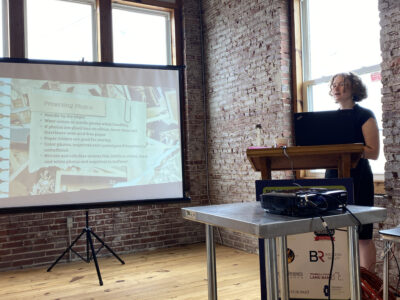
WARREN -- Representatives of the Trumbull County Historical Society presented information and techniques used for preserving family photos and other historical documents during a hands-on preservation workshop Saturday at the site of the future Trumbull County Science Fiction Museum.
Denise Rising of Warren grew up in Fowler and is a member of the Fowler Township Historical Society.
"I came here to gain some knowledge about preserving our photos at the Butts House Museum," Rising said.
Agents that cause deterioration were discussed, including high and very low temperatures, insect pests, light, pollutants from acidic boxes and paper, and off-gassing from shelving units and display cases. The ideal storage conditions are temperatures around 72 degrees and a relative humidity of 30-50%, according to Savannah Moss, collections and research manager for the TCHS.
Tape, paper clips and staples should be avoided, as tape stains items and paper clips and staples rust. Safe removal of paper clips and staples was demonstrated. A makeup sponge was available for use by the attendees to clean a soiled postcard. PVC plastic should be avoided when archiving documents and pictures. When purchasing sleeves for photos or documents, they should be made of polyester, polypropylene or polyethylene.
"If it smells like plastic, don't use it," said Kate Pfouts, TCHS archivist, referring to the off gassing of compounds from PVC plastic.
Moss and Pfouts discussed digitizing and / or backing up family history collections, emphasizing the importance of being prepared in the event of a fire, natural disaster or flood.
Frank Krygowski of Poland brought old family photo albums to the workshop and discussed the possibility of digitizing the photos with Pfouts and Moss.
"My siblings told me 'now that you are retired you have the time to take care of the family pictures.' Digitizing seems the way to go," Krygowski said.
Pfouts said that archival materials are readily available from multiple sources online.
"It costs money to preserve things. We get a lot of our materials from Amazon," Pfouts said.
Pfouts and Moss wear nitrile gloves when archiving documents to both protect themselves from potential mold or acid on surfaces and to protect documents from oils from their hands. White cotton gloves are not recommended because of the tiny fibers on them.
If old photos are attached to paper surfaces, unwaxed, unscented dental floss can be used to detach the photos without tearing them, they said.
Stabilo pencils or No. 2 pencils were recommended for archiving when it is necessary to write on a photo or document. The ink used in Stabilo pencils is water soluble, so an erasure with a damp cloth is possible.
The use of pens is not recommended. The names of people in the photo, the date and the location are the recommended information to be added to photos.
Old newspapers used very acidic ink while more soy-based inks are being used today. However, when preserving a newspaper article, Pfouts and Moss recommended printing a copy of the article on archival paper.
Pfouts and Moss suggested purchasing archival kits for archiving old family pictures and documents. A source for such a kit is Gaylord.com/resources. Pfouts also said that airflow is important when storing articles and suggested saving silica gel packets and using them inside archival boxes before storage.
Garages, attics and basements are not good places for storage. In the house, on a top shelf or even under a bed were locations recommended for storage of old documents and pictures.