
Cancer survivors grateful for camaraderie
Share diagnosis to help others
Trending
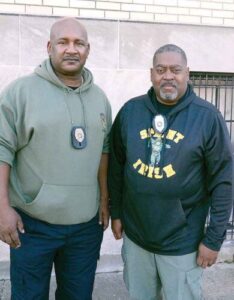
Hostage negotiator Vincent Peterson I was stunned when fellow negotiator Malik Mostella announced at a Mahoning Valley Crisis Response Team training that he'd had prostate cancer.
"It caught me off guard because I had just been diagnosed with prostate cancer," Peterson, 59, of Howland, said.
He hadn't told anyone yet, but when Mostella let the team know, Peterson spoke up, too.
"To me, it was kind of moving," Peterson said. "Some of our SWAT members cried. They came up afterward and hugged us."
"We're a pretty close-knit group," Mostella, 52, of Youngstown, said.
Mostella was diagnosed in April 2022, Peterson in July 2022. Mostella underwent surgery Sept. 7, 2022, Peterson Nov. 18, 2022. Both surgeries were successful.
The hugs and tears of others helped, they said.
"As negotiators, we're always talking to people to help them through a crisis, through life or death," Peterson said.
Both men have expressed gratitude to their families, churches, fellow officers and perfect strangers who shared the journey with them.
"There were other people that I had no idea had been through it. It was very encouraging to me. It became a source of strength. That's the great part about being on a team," Peterson said.
Mostella and Peterson now are on a mission to encourage other men to get checked for cancer, and if diagnosed, not to go on the journey alone.
PROSTATE CANCER FACTS
Prostate cancer ranks as the most commonly diagnosed type of cancer in the United States other than skin cancer, according to the Prostate Cancer Foundation. One in eight men will be diagnosed with prostate cancer.
If caught early, the five-year survival rate in the United States is greater than 99%. Still, prostate cancer remains the second-leading cause of cancer deaths among U.S. men, the foundation reports. Ninety-four men die from it every day.
The odds of being diagnosed with prostate cancer increase with age, with nearly 60% of all prostate cancers being found in men older than 65.
"The prostate gland is part of the male reproductive system and is a walnut-sized gland located below the bladder," according to the website cancer.gov.
More than 95% of prostate cancers are classified as adenocarcinomas, which are derived from the glandular cells of the prostate. Less common types include small cell carcinoma, neuroendocrine carcinoma, transitional carcinoma and carcoma.
Treatments vary depending on type of prostate cancer and stage of development. Treatment does not have to have to include either surgery or chemotherapy. In some cases with non-aggressive cancers, just monitoring might be all that's needed, according to the foundation.
ROUTINE CHECKUPS
For both Peterson and Mostella, their prostate cancers were caught during routine checkups.
"A lot of people don't go to the doctor," Mostella, who is the Youngstown Police Department's community liaison, said. "A lot of people get their information from movies and TV."
Mostella said he frequently gets questions about his symptoms.
"No symptoms," he said. "I went in for a routine visit and my PSA (prostate-specific antigen test) had jumped."
The 24-year police veteran said that when diagnosed, "cop mode" and "hostage negotiator" mode kicked in.
"At that point, I didn't have time to be sad or to break down. In my mind, it was, 'OK, what do I do next?'" he said. "I didn't have the breakdown part until it was over, after the surgery, and I realized, 'Hey, I was dying.'"
Now guys talk to him all the time about his experience, he said. He advises: "Do what your doctor tells you to do."
"Your doctor and your wife," Peterson said.
He said he learned a lot about the need for checkups and how to navigate the cancer journey from his wife, who is a breast cancer survivor.
Peterson, the officer in charge of adult probation in Trumbull County, was recovering from the coronavirus when he was diagnosed.
"The day I could actually leave the house, I got the call that I had cancer," Peterson said. "I was worried about how to tell my wife, children, my mom and my brothers. When you're in law enforcement, your attention goes into other people. I was even concerned about telling my church. They had been praying."
Besides probation and police work, Peterson is pastor of Providence Baptist Church in Akron.
"Our churches were a strong source of power and uplifiting," he said.
The day after Peterson received the diagnosis, Bishop David Herron, pastor of Monument of Faith Church of God in Christ in Warren happened to call. Peterson opened up to him. Then Mostella told the SWAT team and Peterson opened up to them.
"When my wife was going through breast cancer, she was very open," Peterson said. "She didn't hide it from me and wanted to help other women. I learned from my wife."
Both Peterson and Mostella soon realized that men are not nearly as open as they need to be.
OFFERING ENCOURAGEMENT
Once they shared their diagnoses, "We also got phone calls from people going through what we went through, asking how to do it," Mostella said. "There is a need to do more for information and support.
"You feel like you're on your own, but there's a group out there going through it," he said.
November is designated as Prostate Cancer Awareness Month, Mostella said. Now he and Peterson would like to take it from an awareness to an actual event.
"We're talking about putting together a community event next year," Peterson said.
Mostella said that the takeaways from their own experiences that they want to share are:
• "Get checked out."
• "You're not alone."
• "Keep gathering information. There are five or six ways you can treat this. Not everyone needs chemotherapy."
Peterson added that he also wants to encourage spouses to be strongly supportive of whatever decisions are made for treatment after gathering all the information. "I did the same with my wife when she had breast cancer."
Opening oneself up to others can be hard, Mostella said, "But it's so important to show people it's OK and there's a way to deal with what you're going through.
"When something like this happens, you learn what you are truly about," he said.