
Valley can’t shake COVID-19
State shatters case high marks heading into ’22
Trending
Although it looked for a while that Ohio, and the nation, finally was emerging from the COVID-19 pandemic, the year ended with record-high case numbers because of new variants of the virus.
As Ohio enters 2022, there are no signs of the virus letting up.
Until this month, January had the highest number of COVID-19 cases reported for a month in 2021.
But as vaccinations became more available, the number of cases declined.
On Feb. 11, Gov. Mike DeWine announced the lifting of the state curfew as a result of a decline in COVID-19 hospitalizations.
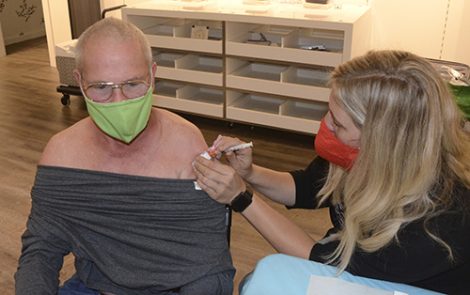
In March, eligibility for vaccination appointments opened up, and people quickly signed up to go to vaccination clinics to get the shots. But despite more than enough vaccinations available for those eligible, the demand decreased by May.
DeWine announced March 4 that once the state got below 50 COVID-19 cases per 100,000 residents, he would lift all virus-related health orders, including a mask mandate required for those in public spaces.
He said that day: "The end of our fight is now in view, but we must continue pressing forward in these final days."
DeWine expected the state to get below 50 cases per 100,000 by June. But on May 14 -- with the state averaging about 120 COVID-19 cases per 100,000 residents -- DeWine lifted the mandate.
That came shortly before a veto override, approved March 24 by DeWine's fellow Republicans in the state Legislature, of a bill to limit the governor's ability to impose public health orders and declare state emergencies was to take effect. The override had a 90-day window before it was enacted.
It turned out DeWine was correct as the state fell below 50 COVID-19 cases per 100,000 on June 5. It dropped to its lowest mark of 19.2 cases per 100,000 on July 2. That followed a record low for a full month during the pandemic of 9,390 COVID-19 cases for June.
DeWine lifted the state of emergency on June 18, which first had been declared March 9, 2020. The Legislature would have removed it a week later if DeWine didn't do it first.
But in July, the delta variant hit, and cases began to increase.
DeWine said July 9 he was concerned about the variant.
"It is much more contagious than what we've been dealing with in regards to this pandemic when it started so we've got people who are unvaccinated and we've got a delta variant that's really picking up steam in not only Ohio, but other states," he said.
By September, 193,072 cases were reported for the month. It was the most since January.
This month, the state reached a new record high with the delta and omicron variants on the rise.
Several days in December recorded daily COVID-19 case numbers greater than the entire month of June.
Using federal COVID-19 grant money, DeWine touted two state lotteries -- including one that gave away five prizes of $1 million each -- to help convince Ohioans to get vaccinated.
There was no evidence that the lotteries resulted in an increase in people getting vaccinated as only about 55 percent of the state's population was vaccinated by the end of the year despite an initial rush among those eligible happened in the early months of 2021.
That was, in part, because of people who opposed the vaccines and others who were skeptical of their effectiveness.
Despite COVID-19 cases exceeding 1,000 per 100,000 Ohioans by the end of the year and all 88 counties being above 100 cases per 100,000 for four months, DeWine declined to impose any health restrictions.
He said his hands were tied because of the legislative veto override that limited DeWine's authority but didn't eliminate it.
A number of Republican legislators pushed a bill to stop vaccine mandates -- and not just for COVID-19 -- by employers.
The Ohio House passed a bill to grant exemptions from the COVID-19 vaccine mandates, but the state Senate has declined to consider it.