
CSB workers trained to use overdose drug
Trending
WARREN -- The vast majority of employees at Trumbull County Children Services received training and kits with naloxone, an opioid overdose reversal drug, becoming the first agency of its kind to do so in Ohio.
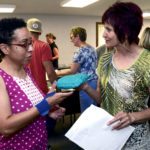
About three dozen employees Thursday attended the second of two training sessions the agency offered its employees. About 40 attended the first, said Claire Gysegem, community liason for the agency.
Stephanie Domenick, a case worker from Warren, said she personally knows people suffering from an addiction to an opioid-based drug like heroin, fentanyl and oxycodone. Now that she received training on how to use naloxone, Domenick said she feels more confident she could help someone suffering from an overdose.
Domenick said she would carry naloxone -- administered nasally and not a substitute for professional medical help -- when she goes on home visits to Trumbull County families, just in case she sees someone who needs it. Domenick said she would keep it on hand in her personal life too.
Tim Schaffner, executive director of the agency, said although none of his employees have had the need to use naloxone at the agency or during a home visit, "the odds are, yes, it will be needed." The majority of kids in the agency are there because of a drug-related issue in the home, Schaffner said.
"We go into the homes, we spend a significant amount of time in homes and families come in to visit their children in our visitation wings," Schaffner said. "We want to make sure if it is on our watch that we do what we can to keep people alive until they are ready for treatment," Schaffner said.
Some kids have even administered naloxone to their parents, Schaffner said.
Also known by its brand name, Narcan, naloxone is provided free by the Trumbull County Combined Health District through ProjectDAWN grants administered through the Ohio Department of Health,
The kits come with two 1 mg doses, instructions on how to use them, and a mouth guard so the person administering the drug can also provide mouth-to-mouth rescue breathing before and in between doses of naloxone.
If a person is not overdosing on an opioid, the drug will neither help or hurt, said Kathy Parrilla, the public health nurse at the health district.
Anyone can receive the kits for free through the health district, as long as they attend an hour-long training session.
Parrilla said she is happy more and more people are taking the time to go through the training and obtain a kit, even those who don't personally know someone at risk for overdosing on an opioid.
"We have seen a really big change in the community. Many more are taking the time to do something that could help save a life. It may not be somebody they know, but they believe in being there to help. It gives me confidence, to see more people coming around," Parrilla said.
After sharing the agency's choice to get its employees certified to carry naloxone at a state meeting recently, Schaffner said he believes more children services agencies across the state will follow suit.
"This is another way to take care of the families we work with. It is one of their essential needs, unfortunately, at this time," Schaffner said. "We don't see the controversy that we see in social media about whether or not to administer Narcan -- we see moms and dads and sisters and daughters, the parents of our kids."
The agency made sure it was protected from liability before moving forward with the training program, Schaffner said.
Drugs on the street are more powerful than ever, Parrilla said, so having doses of naloxone on hand to immediately treat someone while paramedics are on the way is more important than ever. What is often marketed as heroin can contain synthetic, lab-made drugs like fentanyl, a painkiller 50 times more powerful than heroin; carfentanil, an elephant tranquilizer; and other, new synthetics showing up in county coroner toxicology reports.
The number of deaths from accidental drug overdoses has increased in Trumbull County every year since 2013. A record was set in 2016 when 107 died from accidental overdoses. This year, 40 are confirmed to have died, while toxicology screenings are pending on 18 other suspected cases, according to the Trumbull County Coroner's Office.
Naloxone has been used to help save the life of someone overdosing at least 460 times this year, according to the Trumbull County Mental Health and Recovery Board.
rfox@tribtoday.com