
TO YOUR GOOD HEALTH: Deciding on need for MMR vaccine
DEAR DR. ROACH: Recently, you wrote that people who were born before 1957 are likely to have had measles and don’t need to get the measles vaccine. I was born in 1954 and had measles in 1959 (with photographs to prove it). Last year, I had an MMR (measles, mumps, rubella) titer test, which showed that I had sufficient antibodies for mumps and rubella but insufficient antibodies for measles.
I’m concerned because I can’t receive the live measles vaccine unless I suspend my biologic medication for rheumatoid arthritis. This would suppress my immune system for at least two months and cause me to relapse into severe joint pain. I was told that if I did receive the vaccine without stopping the biologic, I’d certainly develop measles.
Also, sometimes after restarting the biologic, it’s not as effective as it was before it was temporarily suspended, which is a major consideration. If I were to contract measles again, would my “insufficient” antibodies at least make the case less severe?
— G.C.K.
ANSWER: Fortunately, for you, the answer is clear. With a proven case of measles, you don’t need another vaccine, even if your antibody titer is low and you are on a medication that suppresses your immune system. Although the antibodies in your blood may be low, your immune system is capable of rapidly and dramatically increasing them if you are exposed to measles again, even more than 60 years later.
For a person who was born after 1957 without clear evidence of two live measles vaccines and has inadequate titers from the laboratory, the situation is much more difficult. You are right that the live MMR vaccine can’t be given to a person with high-level immunosuppression.
So, this hypothetical person would need to weigh the risk of measles against the risk of stopping their RA medication. The exact type of medication needs to be considered, as some have a greater risk of relapse when stopping them than others.
It also depends on how likely a measles exposure might be. Measles is among the most contagious diseases known, and close contact with a susceptible person is likely to spread the disease. So, in the case of a measles outbreak within a person’s community, it may be worth the risk of an RA relapse to hold the medication and get the vaccine.
If a person with immunosuppression has a known exposure to measles, there’s a post-exposure treatment of immune globulin that can be given to reduce the risk of contracting measles. The recurrence of measles in the United States is a public health tragedy that needs to be aggressively countered. Fortunately, the recent outbreak in the Carolinas is reported to have ended, mostly thanks to increased vaccination.
Lifestyles
DEAR ANNIE: How to get rid of torture from roommates
DEAR ANNIE: I’m 26 and sharing an apartment with two roommates who make my home life miserable. There’s ...
Senior news
To be included or submit items to be published in the weekly Senior News list, email information to ...
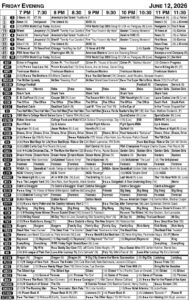
FRIDAY EVENING TV LISTINGS
TO YOUR GOOD HEALTH: Deciding on need for MMR vaccine
DEAR DR. ROACH: Recently, you wrote that people who were born before 1957 are likely to have had measles and ...
Gen Z hits the seas for vacation
Picture the classic cruise passenger with a deck chair, ocean view and a formal dinner by 6 p.m. That image clashes ...
I am going to live independently forever — not
If only I could clone my younger, more athletic self so that the clone can take care of my harder life ...