
Trending
A fine declarer plays many hands as if he can see every card in the defender's hands. This knack of playing as if all the cards are exposed can be attributed to inferences declarer draws from either the bidding or early plays by the defense.
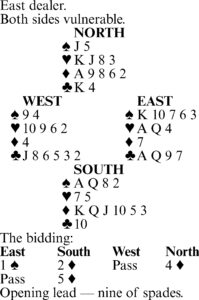
Consider this deal where declarer should make five diamonds even though he seems certain to lose a club and two hearts. Assume West leads the nine of spades in response to East's opening spade bid. Since the nine is obviously West's highest spade, declarer knows that East holds the K-10, and he should put this knowledge to good use by covering the nine with the jack. Failure to do so would cost declarer the contract after East followed low to West's nine.
After South takes East's king of spades with the ace, he crosses to dummy with a trump, leads a spade, and finesses the eight. Next he cashes the queen of spades, discarding a club from dummy, and then ruffs his last spade.
The stage is now set for the kill. Declarer plays dummy's now-singleton king of clubs, saddling East with the lead, and East has no recourse. He can return a heart to dummy's K-J, or he can lead a club or a spade, allowing South to discard one of his hearts as he ruffs in dummy. Either way, East's goose is cooked.
Declarer's line of play is clearly indicated from the outset. East's opening bid virtually marks him with the ace of clubs, and West's nine-of-spades lead tells declarer that East has the K-10 of spades. All South has to do is to put this information to good use.
Tomorrow: Bon appetit!