
To Your Good Health: Heart rate variability and its significance
DEAR DR. ROACH: My heart rate variability (HRV) on my heart rate tracker has ranged from 12-14 ms for years now. I read that this means something is going on inside me. Do you have any insight into HRV? I’m a 64-year-old male who is in decent health. My Lipoprotein(a) level is 224 mg/dL, but my other heart tests are OK.
I play pickleball often, walk a lot, and go to the gym once a week. My heart rate is in the 40s when I’m sleeping and in the 50s when I’m resting. I’m 5 feet, 11 inches tall and weigh 170 pounds.
— J.N.J.
ANSWER: HRV is a measurement of how steady the heart rate is. It might be surprising that more variability is better than less variability. The heart should respond to small changes in pressure due to breathing, so a person’s HRV provides an assessment of the autonomic nervous system (the vast part of the nervous system that is not under conscious control).
HRV does give information to help guide a person’s prognosis for some kinds of heart disease, especially after a heart attack. However, a person’s HRV needs to be carefully measured with a clinical instrument under controlled conditions. Home monitors like wearable devices are not as accurate, as they are subject to random error, changes in the nervous system due to caffeine or nicotine, sleep quality, the time of day, emotional stress, and other factors.
The absolute value of HRV from a wearable device is not considered particularly meaningful by experts. However, a trend in HRV over time is potentially significant. I would be more reassured by the unchanging nature of your HRV than the relatively low number that your home device is giving you. (An HRV of 12 ms is low. The most common measurement of HRV is through the standard deviation of NN intervals. A SDNN of less than 50 has a worse prognosis than an SDNN greater than 100 in people who recently had a heart attack.)
Even though HRV does provide some useful information, it is generally not routinely measured. Since your number is on the lower side, however, a more careful look at your other heart-disease risk factors is called for.
It sounds like you are doing well with exercise. Your physician should take a careful look at your diet, as it is also important for heart health. A Lp(a) of 224 mg/dL should be considered a very significant risk factor for heart disease, especially given your family history. Most experts would recommend combined treatment, such as a high-dose statin and a PCSK-9 inhibitor, even if your “regular” cholesterol numbers are in the normal range.
Lifestyles
Hints from Heloise: Keeping pairs of socks together
DEAR HELOISE: For the past 50 years, I have kept pairs of socks together by using safety pins. I don’t know where ...

Bridge by Steve Becker
To Your Good Health: Heart rate variability and its significance
DEAR DR. ROACH: My heart rate variability (HRV) on my heart rate tracker has ranged from 12-14 ms for years now. I ...
Celebrate National Scribble Day today
Today is National Scribble Day, created by author and illustrator Diane Alber to celebrate creativity and ...
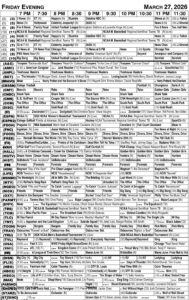
Friday evening TV
Seniors can emphasize balance when being caregivers
Spending time with grandchildren can make seniors feel young and valued. Grandparents are often asked to step in as ...