
Embrace bats for the garden, yard
Trending
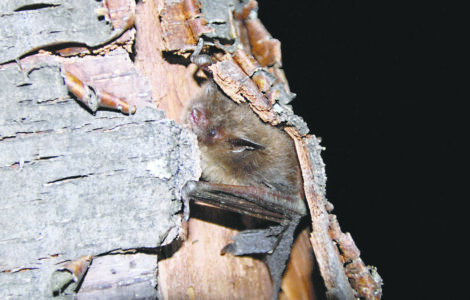
While walking my dog along the daffodil trail (a "must do" with 44 varieties of daffodils) in the Poland Township Park, I came across an informational kiosk. It was titled "Bat Conservation Zone." The sign showed 10 bat species found in Ohio.
Through the North American Bat Monitoring Program, I learned there are 14,000 species worldwide. Our focus here is Ohio bats.
The kiosk explained that bats can eat their weight each night, or about 1,000 insects.
Bingo. You've got my attention -- I dislike mosquito bites, so these mammals appear to be my ally.
I live in a very well-established neighborhood with lots of large trees. I notice that while in my yard I have not been mosquito bitten all that much. That was not true when I lived in a newer neighborhood with few trees. Maybe bats are why. I am starting to love these guys!
Besides making me more comfortable (mosquito-reduced environment) while outside, I also learned insect-eating bats potentially save U.S. farmers $3.7 billion by reducing insect damage and pesticide use.
Some other fun facts: Bats can live up to 30 years, fly up to 60 mph, use sonar to navigate in darkness and are the only flying mammal.
Trivia contest material, but not as important to me as a gardener.
Another kiosk footnote appealed to me regarding bats as pollinators and seed-spreaders.
Since bats and more bats seem to be a good thing, what can we do to encourage and sustain the bat population? There are three key things we can do.
First, encourage nearby healthy woodlands. Woodlands with fewer invasive plants encourage plant and insect diversity, which is attractive to bats. Further, standing trees with shaggy bark, knot holes and tree snags provide daytime nesting places for solitary bats. There is some of this in my current neighborhood.
Second, incorporate a "bat garden" into your space. Such a garden includes late day or night blooming plants. Even better are those that are night-scented and pale in color that attract insect prey. I realized I already have some of this and will think of how I can expand this area.
Third, put up a bat house to support a bat colony. A bat house painted black is best located in a sunny open area, on a pole at least 12 feet high and, when possible, near a pond as a drinking source. Mounting a house on a building's south or east side is an option.
I won't cover how to build a house here, but you can learn how by going to go.osu.edu/bathouses.
Note, I do not have a standing bat house, but my generous brother just built one for me, so I will eventually be sending up the "bat signal" for help.
There are other bat contributions identified through the study of bats, their part in a healthy ecosystem and how they act as bioindicators.
But enough said, embrace (do not hug) the furry little mammals.
For more information, go to http://go.osu.edu/morebats or for building a bat house, go to http://go.osu.edu/bat-house .
Merva is an Ohio State University Extension Master Gardener Volunteer in Mahoning County.