
Siderewicz to testify against energy bill
Power company president claims plan to aid nuclear plants is a bailout
Trending
WARREN -- Turn back the clock 10 years and Blockbuster Video stores were in abundance, until the emergence of Netflix, which changed the way Americans consume their in-home entertainment.
Should Blockbuster have been subsidized to compete with Netflix?
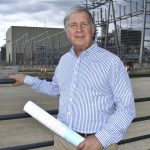
"That is crazy talk," said Bill Siderewicz, president of Clean Energy Future and a minority investor in the Lordstown Energy Center, a natural gas-fired power generating plant on Henn Parkway.
Siderewicz made the analogy Monday -- two days ahead of his scheduled testimony before the Ohio House's energy generation subcommittee on House Bill 6, opponents of which, including Siderewicz, say is no more than a bailout of Ohio's two struggling nuclear power plants.
The legislative proposal that creates the Ohio Clean Air Program, Siderewicz said, could have a chilling effect on a second nearly identical $900 million natural-gas electric plant that would be known as Trumbull Energy Center and built nearby LEC.
Supporters of the bill say it would generate $300 million each year for clean energy production and should save most customers money because it calls for getting rid of renewable energy mandates that add on extra charges.
The idea, supported by the leader of the Republican-controlled Ohio House, drew immediate criticism from groups that favor renewable energy, such as wind and solar, and those who say the plan too heavily favors the nuclear plants.
About half of the money from the surcharge would go to the Davis-Besse nuclear plant near Toledo and the Perry plant in Lake County that produce 14 percent of the state's electricity. The rest would go to expanding Ohio's clean energy sector.
Both plants are slated to close by 2021 unless their operator, FirstEnergy Solutions, can find a buyer or the government eases the cost of operating them.
Siderewicz called the proposal "so embarrassingly silly it's hard to believe it's actually being debated." Subsidizing the plants negatively affects the free market and could cause potential investors in TEC to pull back their financial support, he said.
"If you start tinkering with it like this, obviously it throws a huge monkey wrench right in the middle of it," Siderewicz said.
The proposal calls for a $2.50 surcharge to monthly residential electric bills while commercial customers and businesses would pay $20 and $250. Commercial and industrial users that exceed 45 million megawatt hours of electricity at one location in the preceding year would pay $2,500.
Probably 90 percent of the $300 million would come from residential customers, said Democratic state Rep. Michael J. O'Brien, who co-chairs the subcommittee.
"This is a bailout that all residents in Ohio are being asked to contribute to -- to bail out the bankruptcy of First Energy's two nuclear power plants, Davis-Besse and Perry," said O'Brien, D-Warren.
"The prevailing issue is the two nuclear power plants are bankrupt and to remain open they need hundreds of millions of dollars, and the state of Ohio is providing legislation that the nuclear power plants can apply for and be successful to keep them open for now," O'Brien said, adding if the plants were to close there is enough power from other sources like natural gas- and coal-fired plants -- and, to a lesser degree, wind and solar -- to fill the gap.
The payments would be based on clean air credits of $9.25 to certified clean air resources.
Franco Lucarelli, director of Warren's water department, plans to join Siderewicz to testify in Columbus on Wednesday, the second of two days of opponent testimony.
He said it could stifle the economic boost TEC would provide Warren if it's not built. When LEC came online in October, "it became our largest consumer of water in consumption and revenue," Lucarelli said.
The plant purchases about 2.5 million gallons of water per day from the city. Should TEC be built, it would need an additional 4.3 million gallons of water per day, Lucarelli said. The increase is because Warren water would be the sole provider to the plant, where now Niles also provides to LEC.
In addition, during the proposed 34-month construction time, TEC would fund $25 million to $30 million to improve the city's water treatment plant, to install a new pump station on Main Avenue SW and to install six miles of 24-inch waterline, Lucarelli said.
He projects the city would see $120 million in revenue over the next 50 years from the two plants. It's especially important because the department's largest customers, like RG Steel and General Motors Lordstown, are gone, he said.
"I'm sure you can understand how important that customer could be and should be," Lucarelli said.
In the first legislative hearings last week, supporters warned that closing the plants would set off a recession in the two northern Ohio communities where they operate. They also said the impact would be felt around the state in the form of higher utility bills and would leave Ohio too dependent on natural gas for electricity.
The Associated Press contributed to this story.