
Community wants answers, solutions
Trending
WARREN -- The community has been dealing with the effects of the opioid crisis every day for years and they want answers and solutions that materialize into change.
People in recovery and their family members, parties interested in seeing a change in their neighborhoods and school and examination room officials made their voices heard Monday as journalists from four of the major news providers in the region sat down with them and started taking notes.
The discussion was the second of three meetings organized by the Your Voice Ohio media collaboration with participation from editors and reporters from the Tribune Chronicle, The Vindicator in Youngstown, WFMJ-TV and 89.7 WKSU / National Public Radio.
Many of the attendees were thankful several officials from Warren and Trumbull County attended the forum, but noted the lack of police officers, corrections officers, lawmakers and doctors at the meeting.
"No matter how many ideas people have to reduce deadly substance use, support people in recovery, or hold prescribers responsible, how will anything change if the people in charge of making those decisions aren't listening?" one woman asked.
Participants collectively suggested if resources spent on arresting and jailing users and low-level dealers were put toward recovery centers, early education, support for families dealing with ramifications of abuse and programs that encourage recovery, the area could lift the veil on the addiction problem.
But there is no 24-hour treatment option in the area where a user can go instead of jail right after arrest.
"You might have a two-hour window to get someone you love into treatment," said Linda Spies with Solace of the Valley. "If you find your kid and get him in your car, you need a bed right then or it is not gonna happen. You have two hours until they start feeling sick."
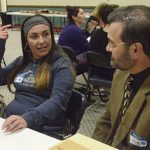
"Or two hours until they start thinking, doubting the choice," said Alexis Graziano of Girard, who has nearly five months of sobriety.
There are other issues with treatment.
"Even though I was sober, I was living on the streets. I didn't have money, I didn't know how to jump through all of the hoops to get help. I knew I needed help, but I hadn't been using, so they wouldn't let me in for treatment because I was clean," Graziano said. "I wanted to give up. My family was done with me, they needed me to prove myself."
Graziano had to use opioids to get a bed. She now lives in a sober house and said she is doing well, but it's been trying.
Two weeks ago she had to go to a local hospital to get an abscess on her arm treated, she said. Even though she explained she is a recovering addict, she said she was offered opioid-based pain killers more than once. She refused, after calling family members and First Step Recovery, where she was a patient.
"That is part of the problem here. These doctors go to medical school for how many years and then they get two hours of training on how to deal with addiction. But they keep writing prescriptions," Spies said.
People want a change on the way addiction is handled at all levels and a different approach -- more medical as opposed to law enforcement.
Going to jail on drug possession charges could lead to recovery, but it also leads to a criminal record that most people in recovery cannot afford to pay to have expunged, one woman said. Also, the system often leaves them unable to do what they need to do to move on -- it takes away their license to get to work, makes it harder to find a job and ties up resources, many in the discussions said.
"And people need a job in recovery," Spies said.